
Everyone has heard of Machu Pichu. It is THE spot to visit when you are in Peru, and having gone there myself in 2018 I can attest that it is a magical place well worth visiting in your lifetime. But most people have not heard of Choquequirao, an extensive complex of Incan ruins high up in the Vilcambamba mountain range overlooking the Apurimac river canyon.
Choquequirao is known as the “sister ruins” to Machu Pichu. While Machu Pichu was built by and for the Incan ruler Pachacutec, it is thought that Choquequirao was built for his son Túpac Inca Yupanqui in attempt to outdo his father.
Probably the biggest reason that you haven’t heard of Choquequirao is that it is very difficult to get to. Therefore it receives far less visitors than Machu Pichu. Currently the only way to get to Choquequirao is by foot. It involves a demanding multi-day trek – 24 miles total with approximately 12-13,000 ft of elevation gain. Most people complete the trip by doing chunks at a time and staying in villages along the way. Keep in mind these numbers only apply if you are lucky enough to get a ride to and from the trailhead at Capuliyoc, in the small town of Cachora. Additionally, these stats do not include any mileage and elevation that you accumulate inside the park itself, which spans about 10 square kilometers. In a nutshell, the journey to Choquequirao is not only physically demanding but also logistically challenging. This is how we did it in one day.
The first logistical hurdle is getting from Cusco to Cachora. Yuch had initially rented a car which was pretty cheap and seemed to make the most sense. However, as the day approached the anxiety regarding road conditions and car insurance (and lack of car insurance on off-road trails) was unsettling enough to prompt us to pivot. He cancelled the car reservation and instead booked a driver.
The dry season is the peak tourist season and many locals get most of their work by driving tourists around. Our driver would be pulling an 8+ hour day each way, since he had to leave from his home in Compone which is west of Cusco, pick us up in Cusco, drive us to Cachora (4ish hours), and then drive back. The cost for there and back was 760 soles – thats about $258 for let’s say 16 hours minimum, approximately $16/hr. To us, it was worth it to not have to deal with driving. We got 1000 soles from the ATM in Cusco before departing thinking we would have more than enough for our trip to a place that likely does not have ATMs.
On the drive to Cachora we got the chance to practice our Spanish with our driver Rolando. He was super nice and forgiving with our Spanish. The drive was smooth and the roads all fairly easy to navigate, nothing that a rental car couldn’t handle. The only caveat is that Peruvians do a lot of passing, some of which can be slightly aggressive and unsettling if you’re a back seat driver. However, we made good time to Cachora in 4 hours which I’m not sure we could have managed on our own. On the drive, Rolando mentioned how he got good money from his job, that his passengers were often very pleased and left him good tips. Yuch and I quietly absorbed the fact that we had not factored in a tip when getting our last ATM withdrawal.
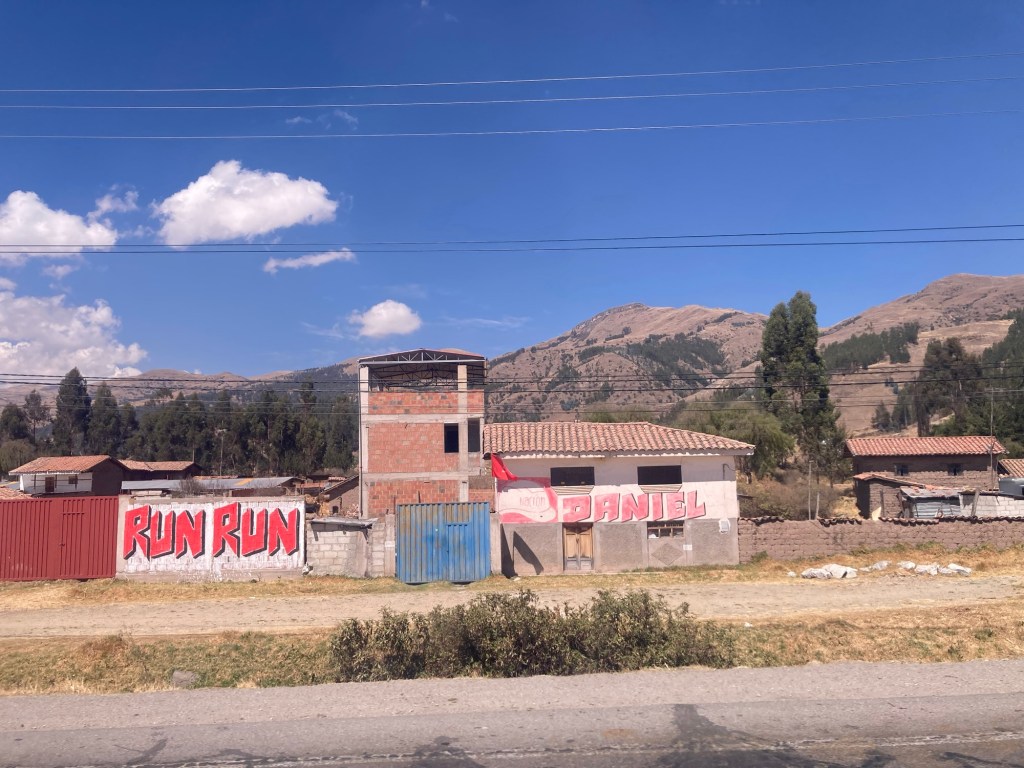
Rolando dropped us off at our Airbnb in Cachora. We asked him if we should pay him half now and the other half later, to which he responded he would take the full amount now. I guess that wasn’t so strange to pay upfront, but then Yuch asked if he should tip now or later to which Rolando again said he would take the tip now. Yuch gave him more of our precious cash and I began to feel slightly apprehensive about our quickly diminishing “efectivo”.
Before Rolando took off he told us he would look into a taxi the following morning. This presented Hurdle #2: getting a taxi at 3:30 in the morning from our Airbnb to the trailhead at Capuliyoc, and getting a taxi back to our Airbnb at who-knows-what time at night. We had also read that Elizabeth, our host, had been very helpful in arranging these taxis for previous tourists. Rolando and Elizabeth spoke briefly about the taxi, but we didn’t think much of it. As long as we had a taxi and we didn’t have to run the extra mileage early in the morning and late at night, we were happy.
The Wooden House has a similar structure as a hostel. We had our own room with two beds, but the bathrooms, showers, and kitchen were in the main house. Between the main house and the rooms is a nice front lawn with multiple covered patios and a nice garden with “tomate de árbol” and “aguaymonto” aka golden berry. The sign in front of the hostel notes that they have “hot showers”, which was a welcoming sign! Thus far, our previous “hot” showers had meant lukewarm. It would be nice to be able to get a hot shower after our all-day adventure the following day!
Elizabeth arranged the taxi to pick us up at 3:30 am the next morning. She also said it would pick us up later that night and that we could just text her as we got closer to Capuliyoc. We honestly didn’t know if we would be getting back at 8 pm, 10 pm, or midnight! We just couldn’t imagine how long this run would take.
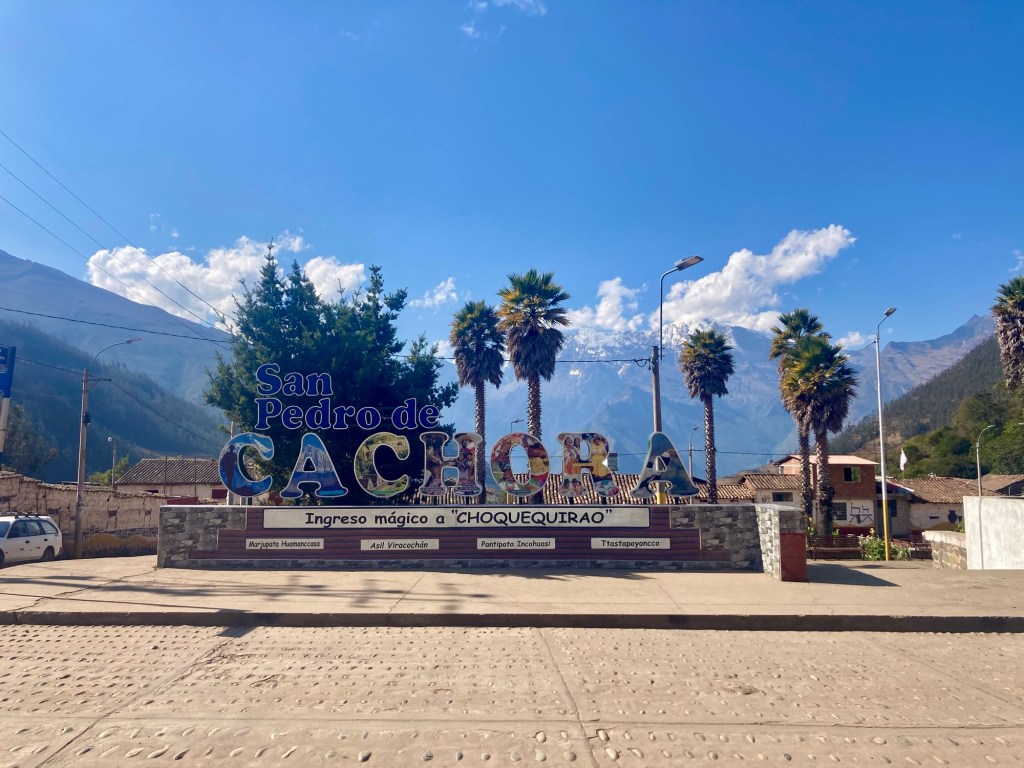


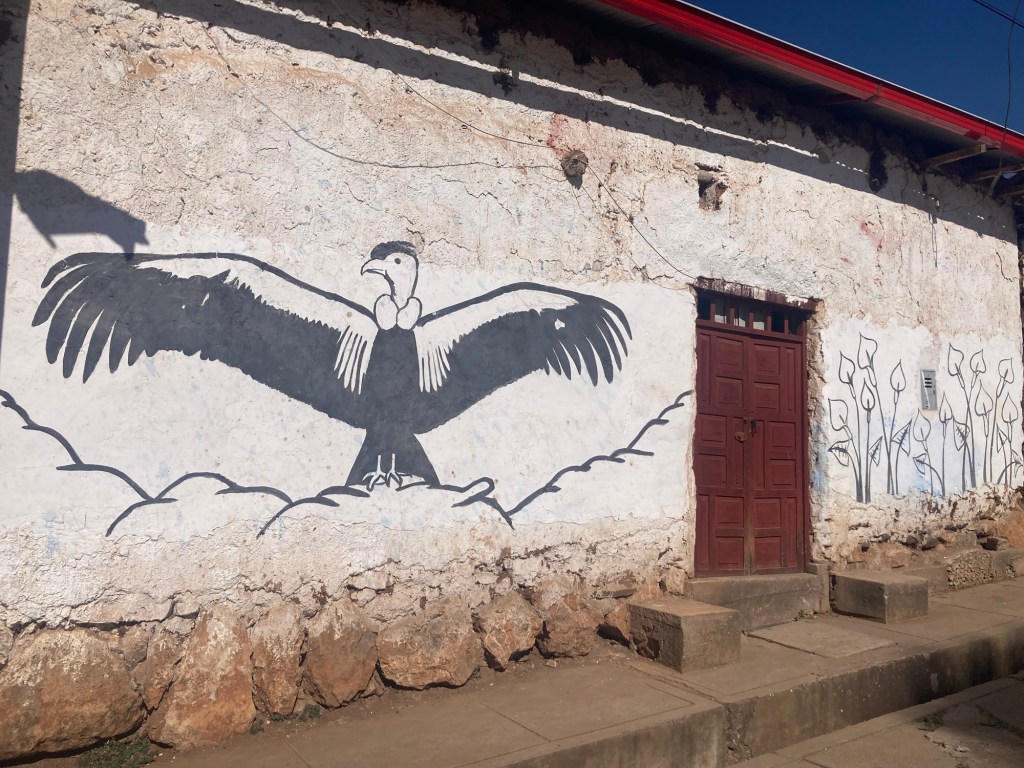
Things were falling into place and we were feeling good. We bought water and some other small provisions, again using more of our cash because these small towns don’t take credit cards. We went to the main restaurant in town that Elizabeth recommended, Cachora Bar Restaurant, which advertised a “menu turístico” and that they took Visa. Perfect! The tourist menu included a starter and entree for 30 soles. We both ordered the palta relleno (stuffed avocado) to start followed by a vegetarian omelet over rice and potatoes.
After eating our delicious starter (in Peru they are much more generous with avocado portions than in the United States), Yuch received a text from Rolando. He wanted to let us know that he arranged for a taxi to pick us up the next morning. Oops. We let him know that Elizabeth had already arranged one and that we were good to go. At first he responded with a thumbs up. Then moments later he proceeded to send an additional message asking how much we were paying. We began to get an apprehensive feeling that there might be some competition happening between him and Elizabeth and told him we didn’t know the cost, but we no longer needed a ride to the trailhead from him. Again he continued to send us messages that we couldn’t quite understand, but we knew we’re not exactly positive/conducive to a good nights sleep. Our entrees arrived and we began to eat, no longer feeling content about our upcoming adventure. We were confused but also worried because Rolando was our ride back to Cusco and we didn’t want to get on his bad side. We had after all already prepaid and pre tipped! We finally ended the conversation saying we didn’t need a ride, we appreciated his help, and that we could no longer discuss the situation because we were going to bed.
When it came time to pay the bill, we asked if we could pay with our credit card and the woman shook her head with a look on her face telling us “you think we take plastic in a place like this??” We dispensed more of our draining pile of cash.
On the walk back to the Airbnb I began to wonder about the price of the taxi. We hadn’t really thought about it but Rolando bringing it up made me wonder if we would even have enough cash to get to and from the trailhead. If we didn’t have enough, we’d have to run a ton of extra mileage. We told Elizabeth about the conversation with Rolando and how we didn’t understand his intentions. She looked at the trail of messages and agreed that the whole thing was annoying and that it made more sense for her taxi driver, who knows the area, to drive us. She called and confirmed with the taxi driver that it would be 50 soles each way. Again, this did not include tip. We had just enough money, but including the 70 sole Choquequirao entrance fee plus bottled water we would need to buy on the trail, it was going to very tight.
The next morning we woke up at 2:30 am. Elizabeth had left us a thermos of hot water for coffee. We made cowboy coffee, piled our fully-loaded packs on us, and departed from the Airbnb. The drive to the trailhead took about 40 minutes. Our driver was very nice. We paid him 55 soles and told him we’d see him later that night.
We departed from Capuliyoc at approximately 4:18 am. We had our down jackets on but surprisingly it wasn’t too cold at 9800 ft. The trail descends about 5,000 ft in the first 6.5 miles to the river. We moved efficiently. We had agreed that we needed to be as efficient as possible to maximize daylight. No dillydallying like we had in the Colca Canyon. As we descended, it got warmer even though it was still dark. We took our jackets off probably after the first mile and I would already be sweating pretty good as we approached the Apurímac river at 4800 ft.
The first village before the Apurimac is Chiquisca, 4.8 miles in. We noted that it took us an hour and twenty minutes to get there which would be helpful to estimate how long that final ascent would take on our return. At the bridge, we stopped to put on bug repellent. The bugs were swarming anytime we stopped, but thankfully we had read about them in someone else’s account and had come prepared.

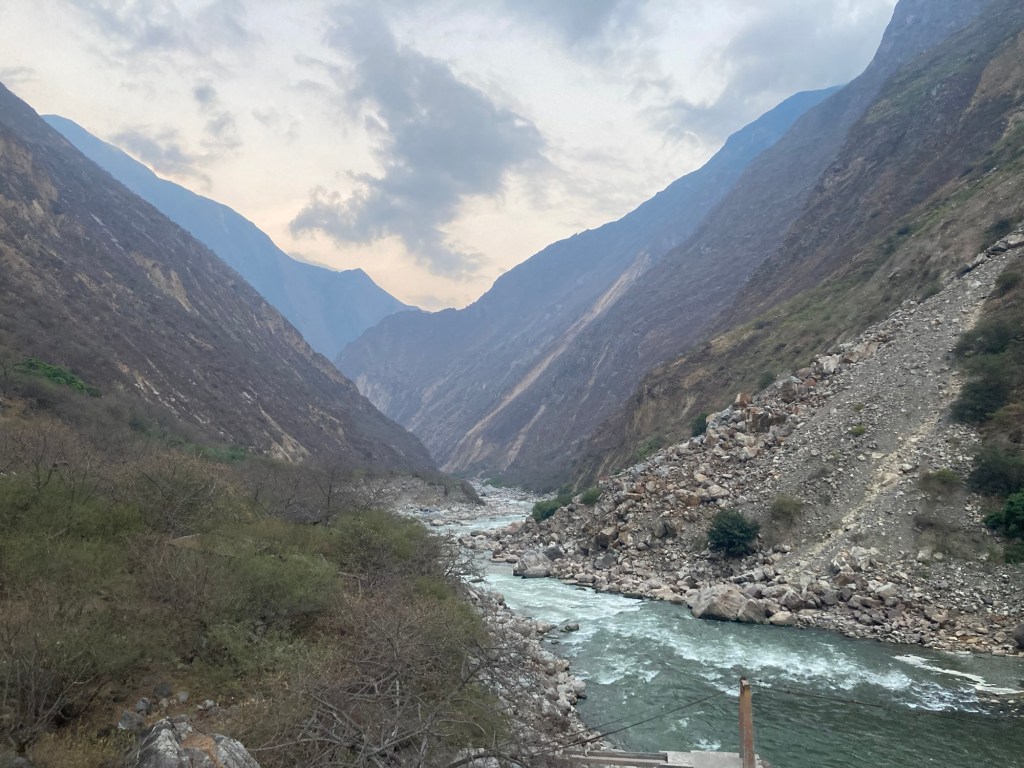
By the time we crossed the river and began our ascent, the sun was starting to rise. From here it would be about 5.5 miles to Choquequirao, mostly climbing. I hiked briskly, with Yuch leading the way. I was able to hike faster than at the Colca Canyon while keeping a similar heart rate (140-150s). I felt like my body was finally adjusting to the altitude. I was surprised with the number of people on the trail, some of which did not look like they were going to make it. Most of them had started from the river and were doing a partial hike that day. Some had burros with them and were descending. I’m guessing the burros bring supplies to the villages along the trail.
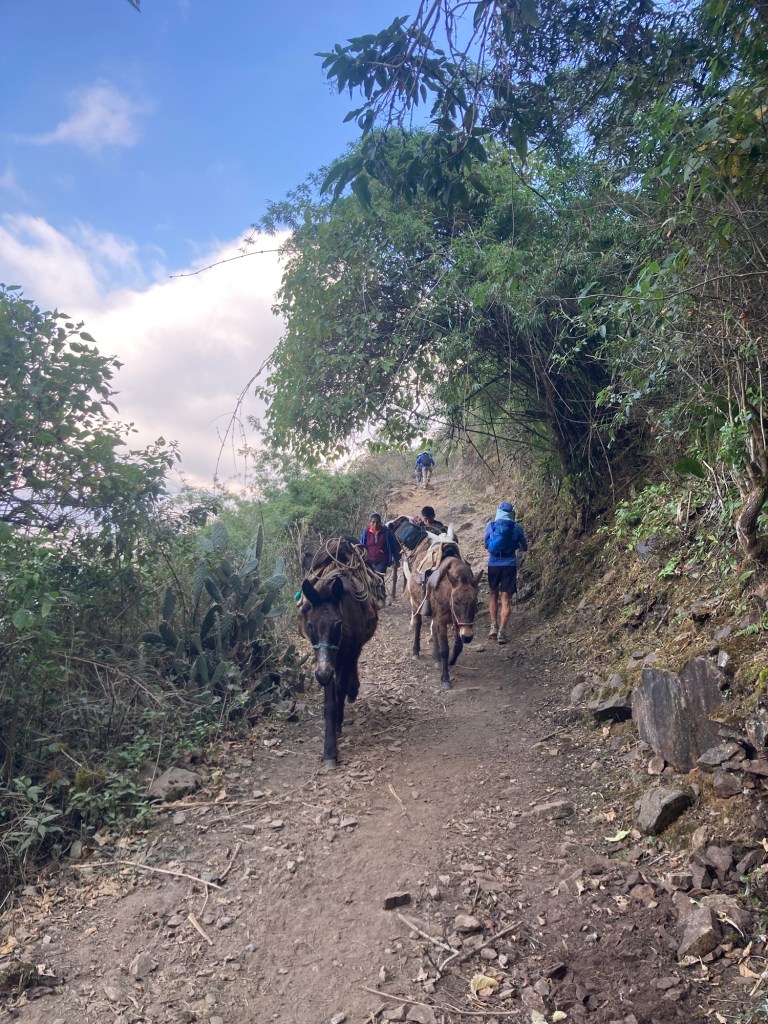
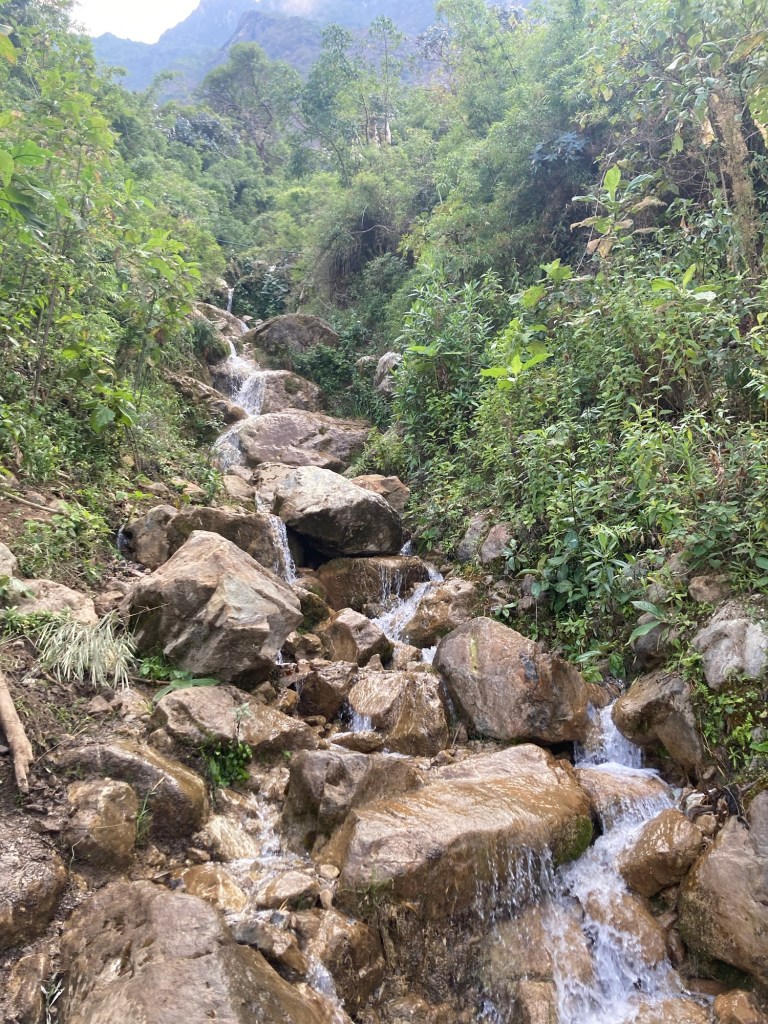
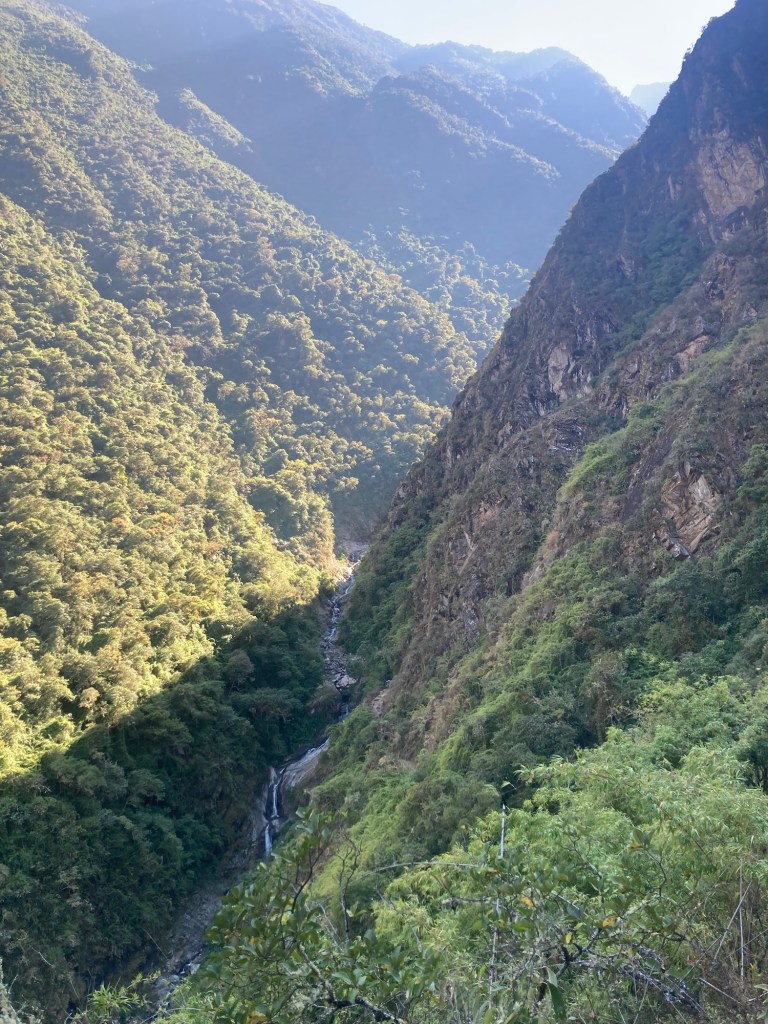
The first village on the ascent is Santa Rosa Baja, followed by Santa Rosa Alta, and finally Marampata, probably the place most commonly stayed at by trekkers. Halfway between Santa Rosa Alta and Marampata we came across the Uchuhuerta waterfall. We filtered water and realized that in addition to another upcoming waterfall closer to Choquequirao, we probably wouldn’t need to buy any bottled water!
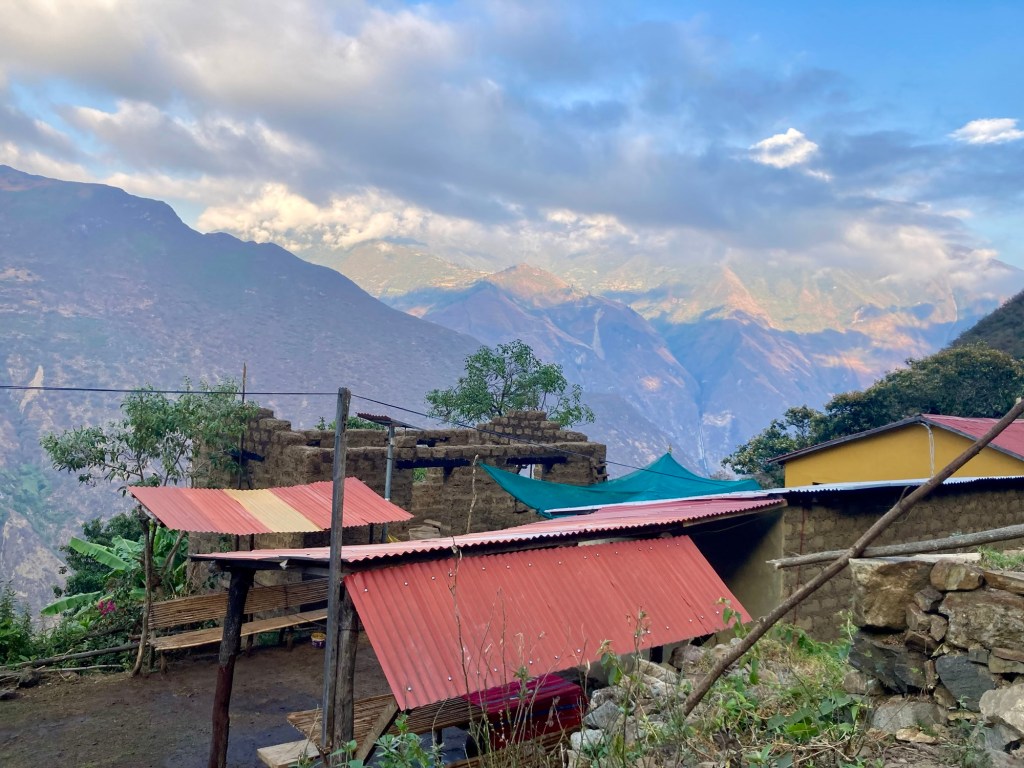
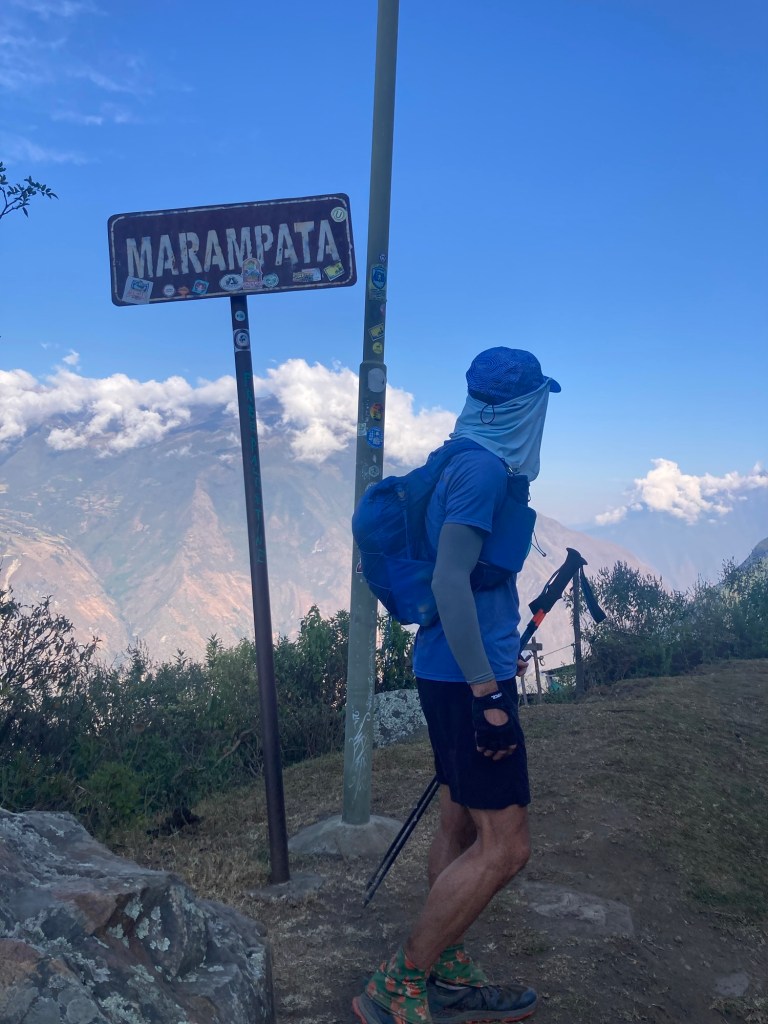

The trail after Marampata is nice flowy single track with a little bit of up and down. It was here that we caught our first glance of the terraces at Choquequirao. It was so beautiful and we stood in awe as if we were the first to discover these ruins!
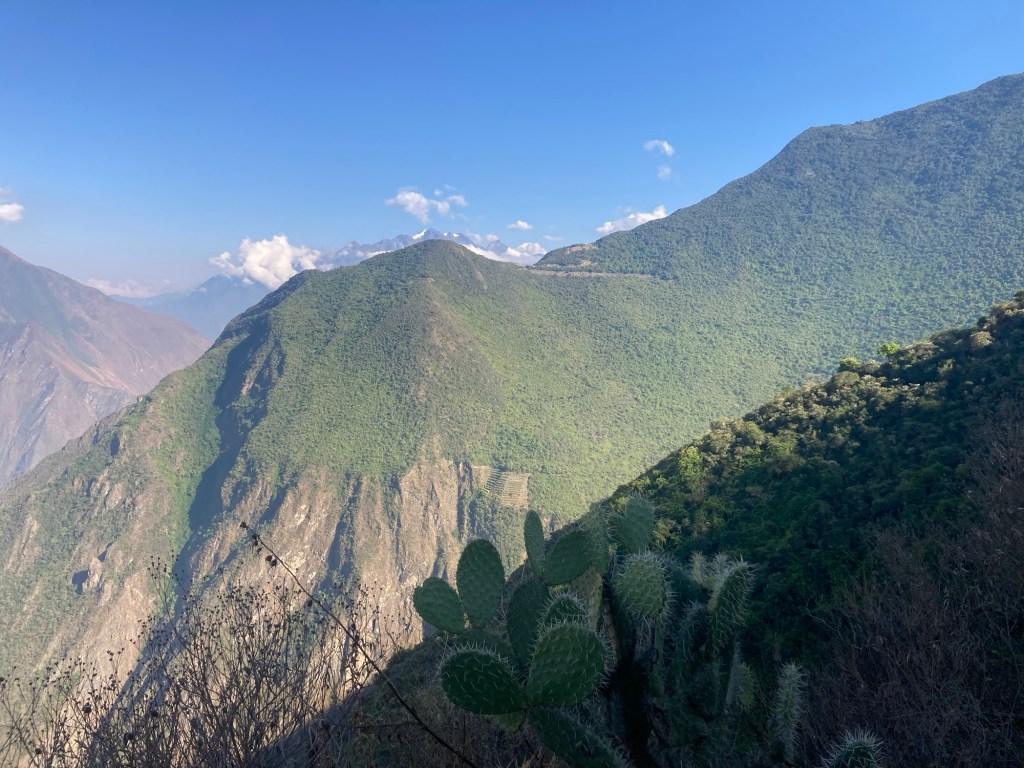
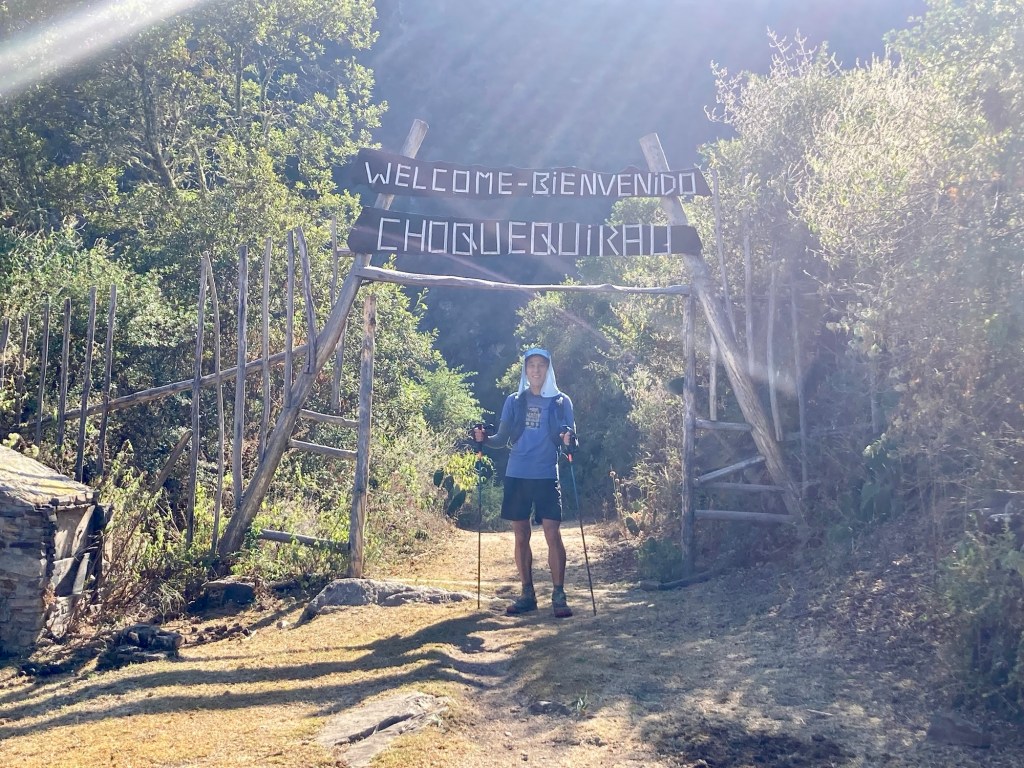
At the main entrance of Choquequirao we encountered a sign but no one there to take our money. We really had no idea when and where we might have to pay our admission fee.
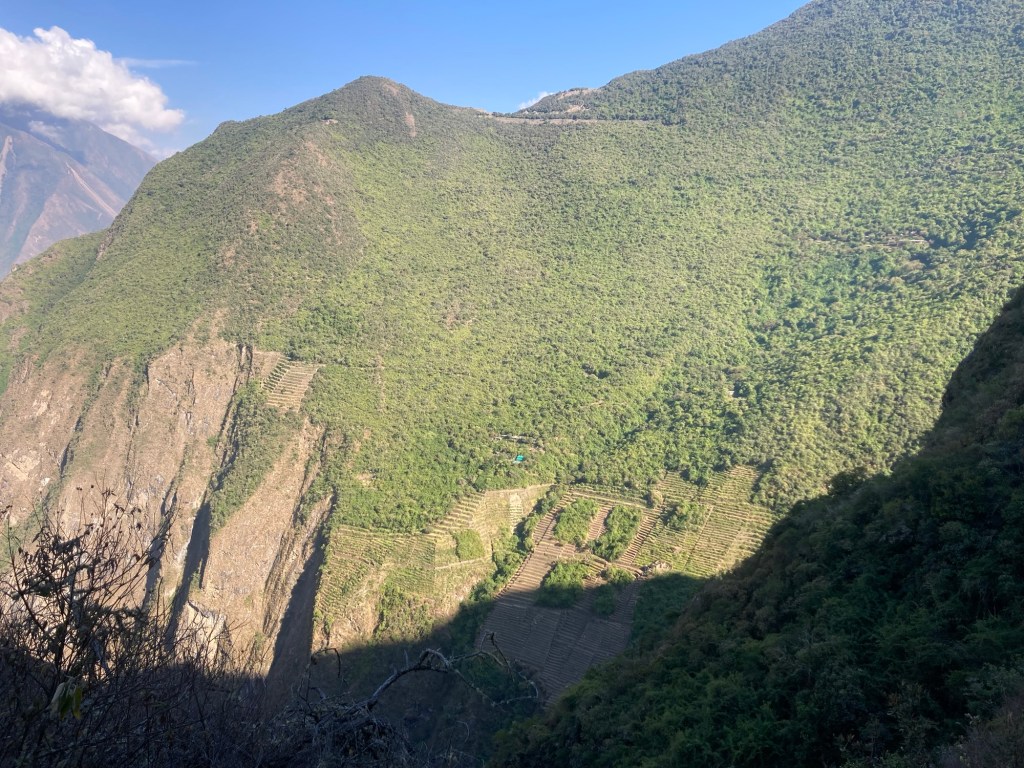
We continued on to the Paqchoyc waterfall but didn’t need to fill up quite yet so continued on.
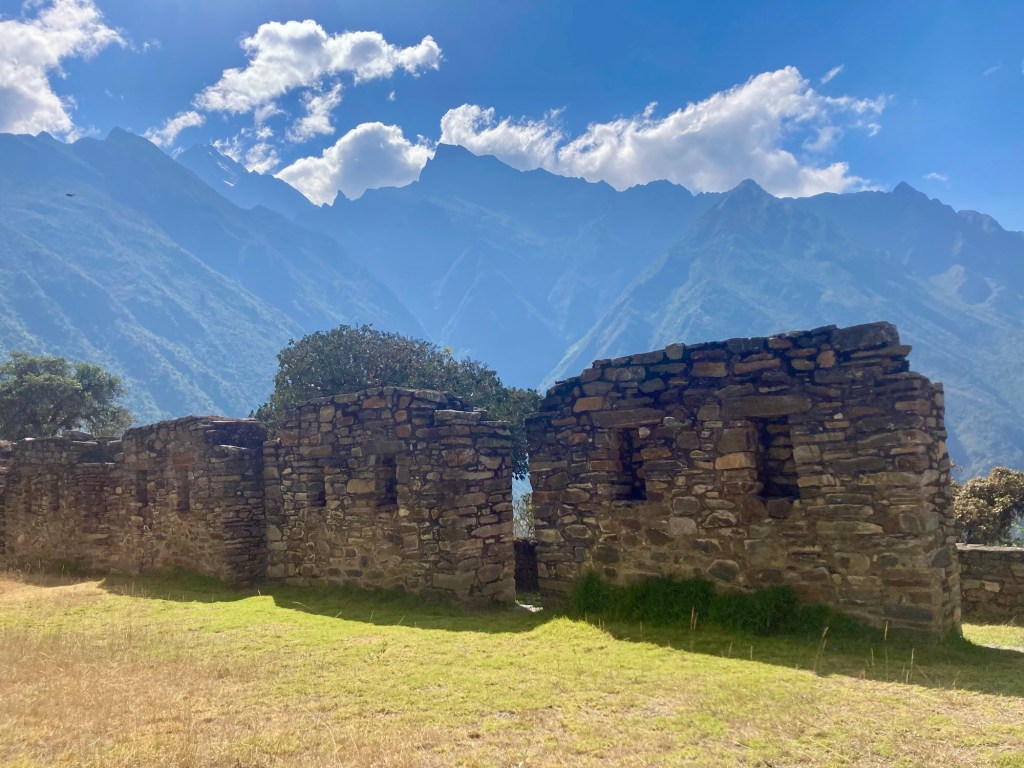
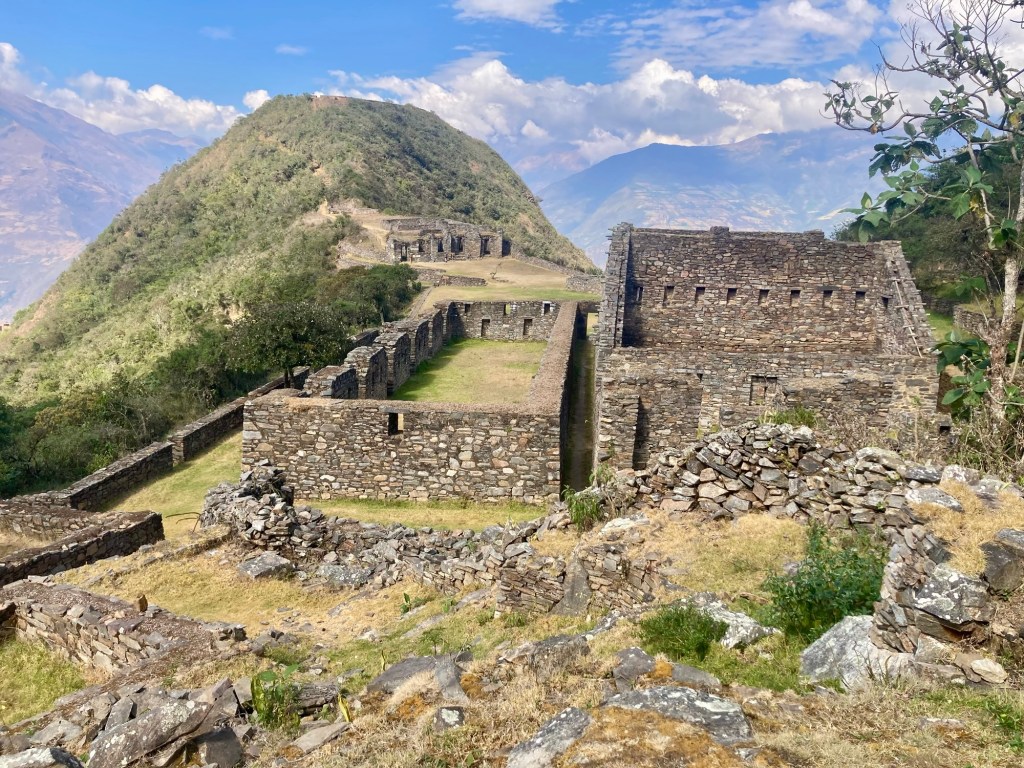
Yuch had plotted a 10k loop around the park starting at the sacred terraces. From there we went to the main plaza, which has the most “house-like” structure with rooms and alcoves. We explored the qolcas (warehouses for storage), and then continued up to the Hanan temple. The Hanan temple is the highest part and has incredible views of the valley and river below. Walking back down from Hanan we also had amazing views of the Ushnu, the ceremonial platform at the top of a hill where sacrifices often took place. But our next stop before the Ushnu was the llama terraces!
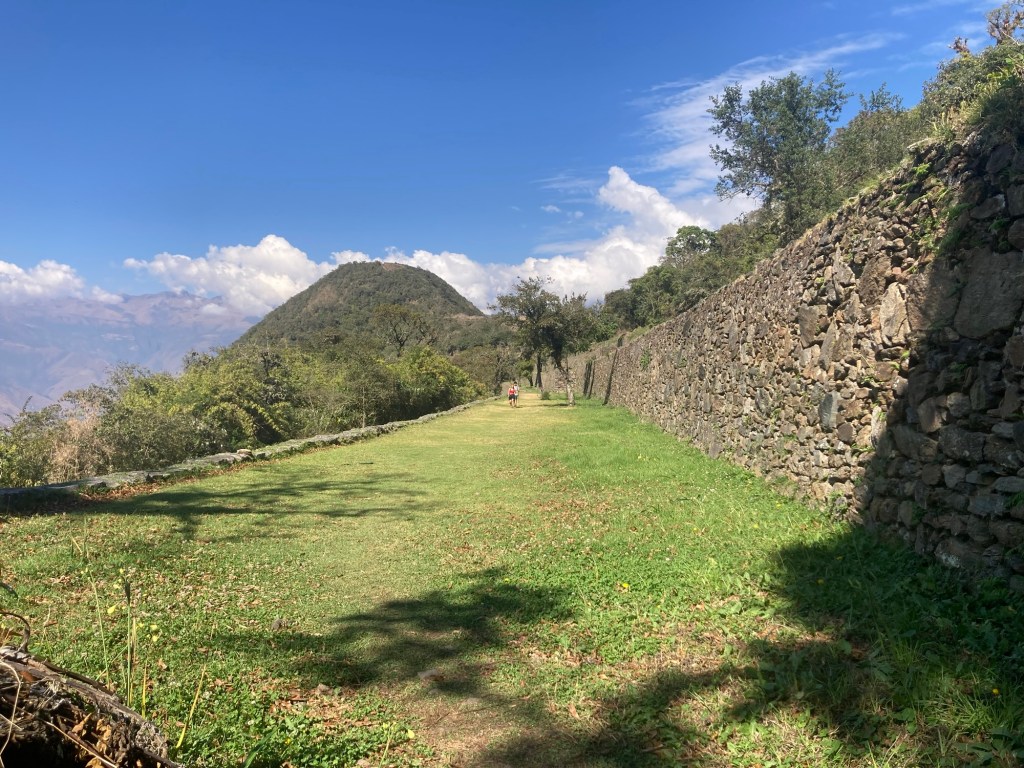
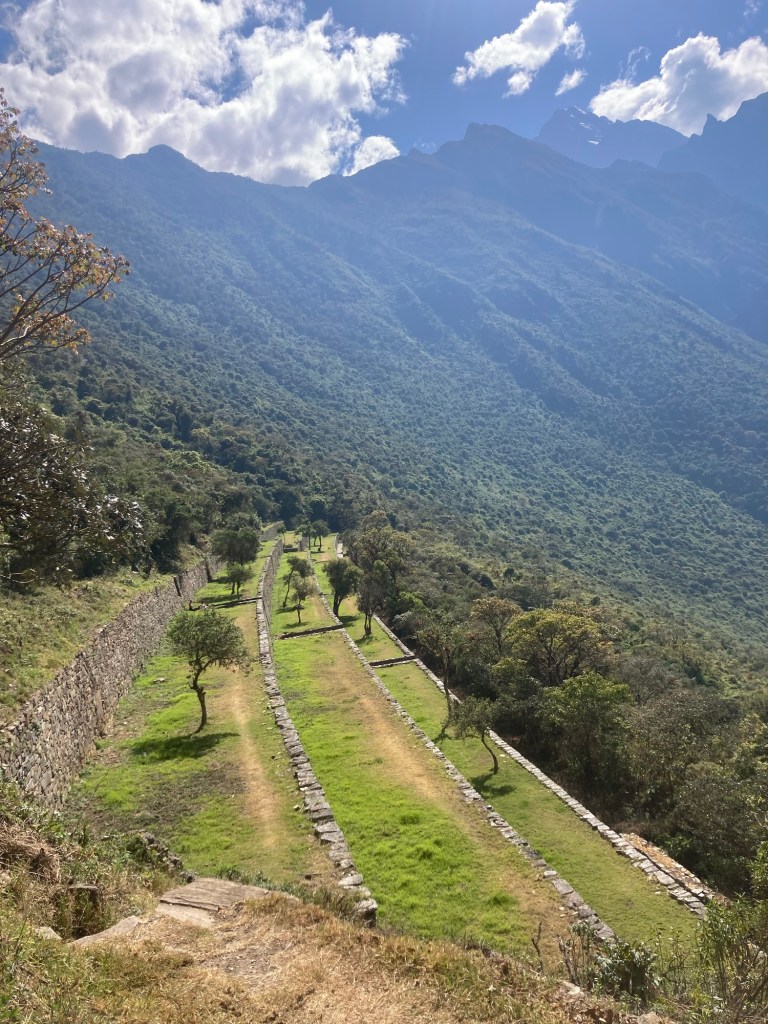
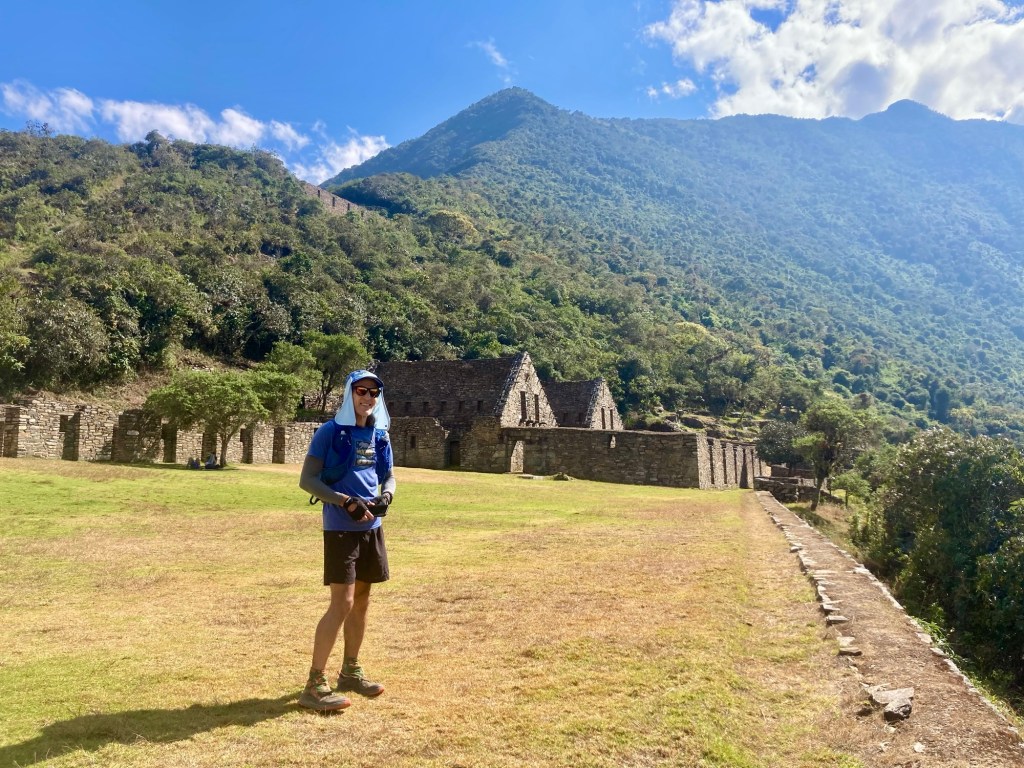
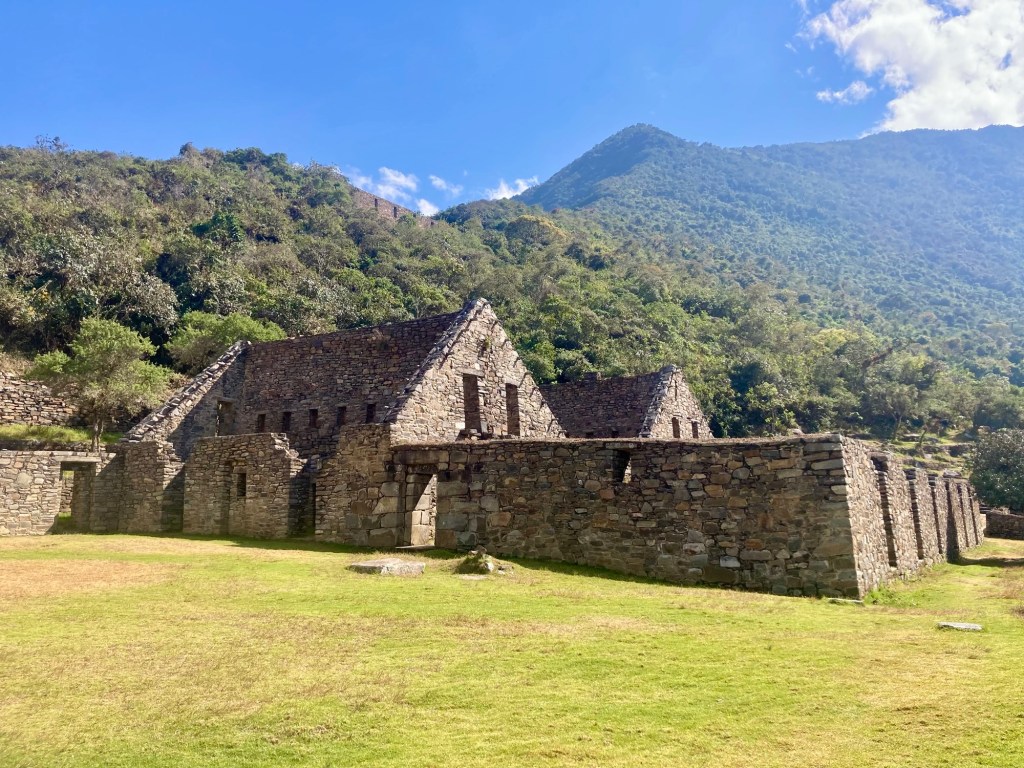


We followed the signs to the llama terraces which took us down quite a bit. When we finally got to what looked like the terraces, we ran into three guys sitting and relaxing on the top terrace. It turns out they too were runners and one of them would be running the Andes 100k! We asked “are we at the llama terraces?” To which one of them pointed down. “Down there”, he said. There were two ways down: the steps or the single track. We opted to take the steps stating we would take the single track back. WOW! I’ve never been down so many steps in my life, and steep steps they were! I joked to Yuch that they were just like the Dipsea steps and soon I’d be doing two-at-a-time.
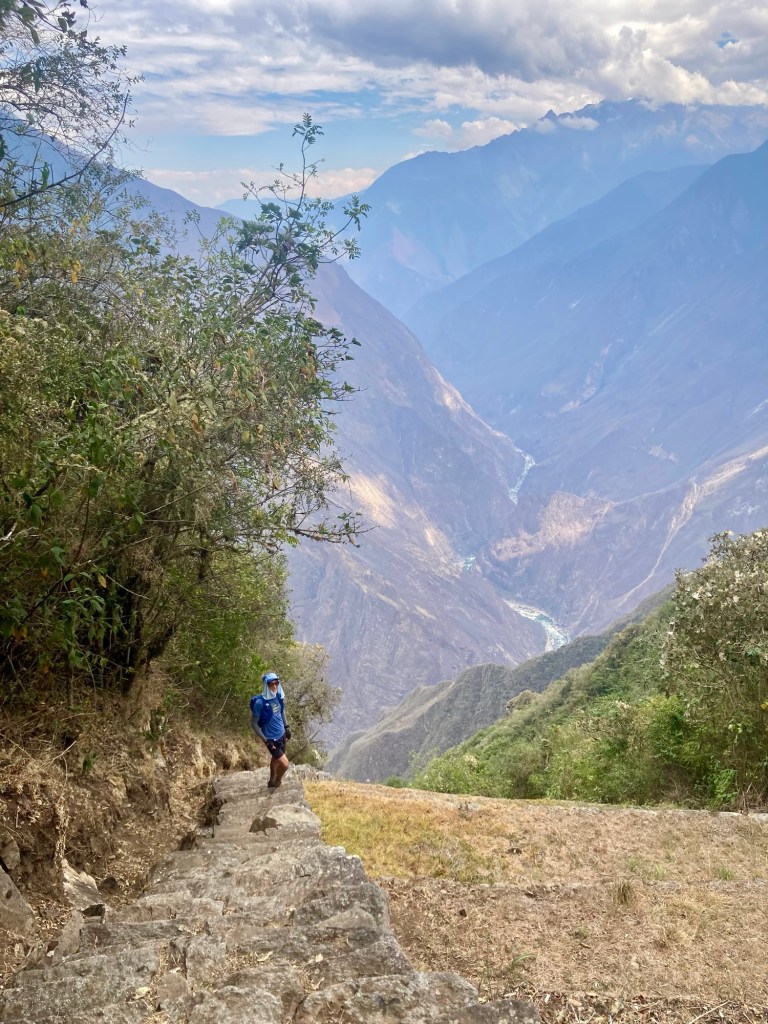

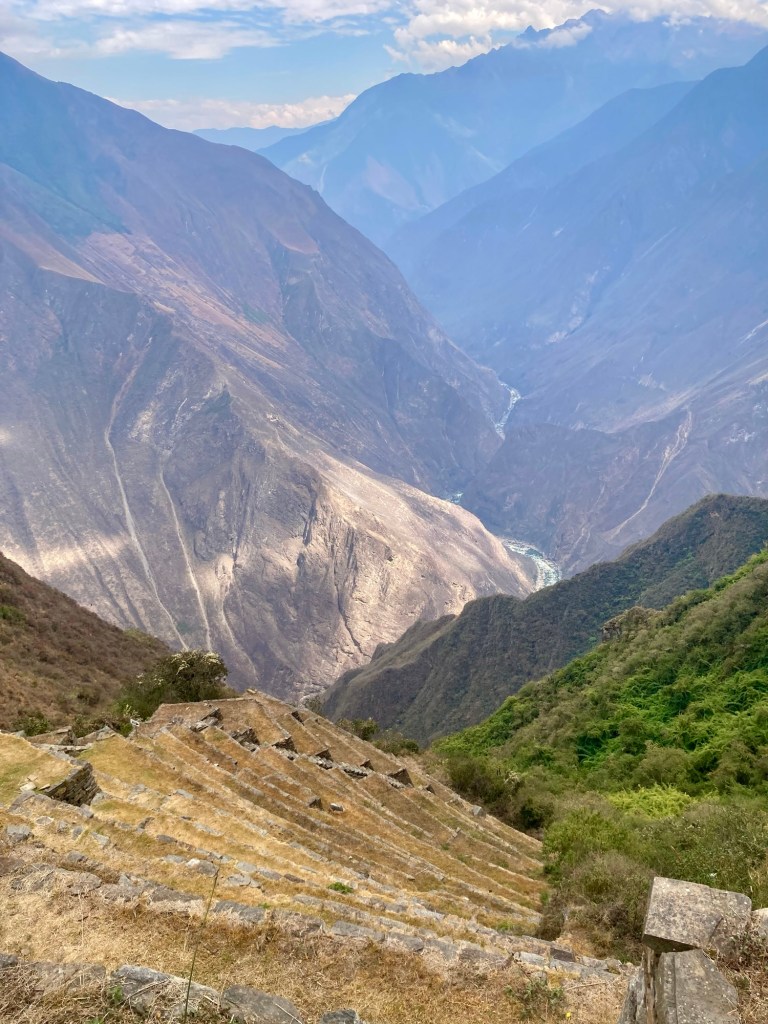
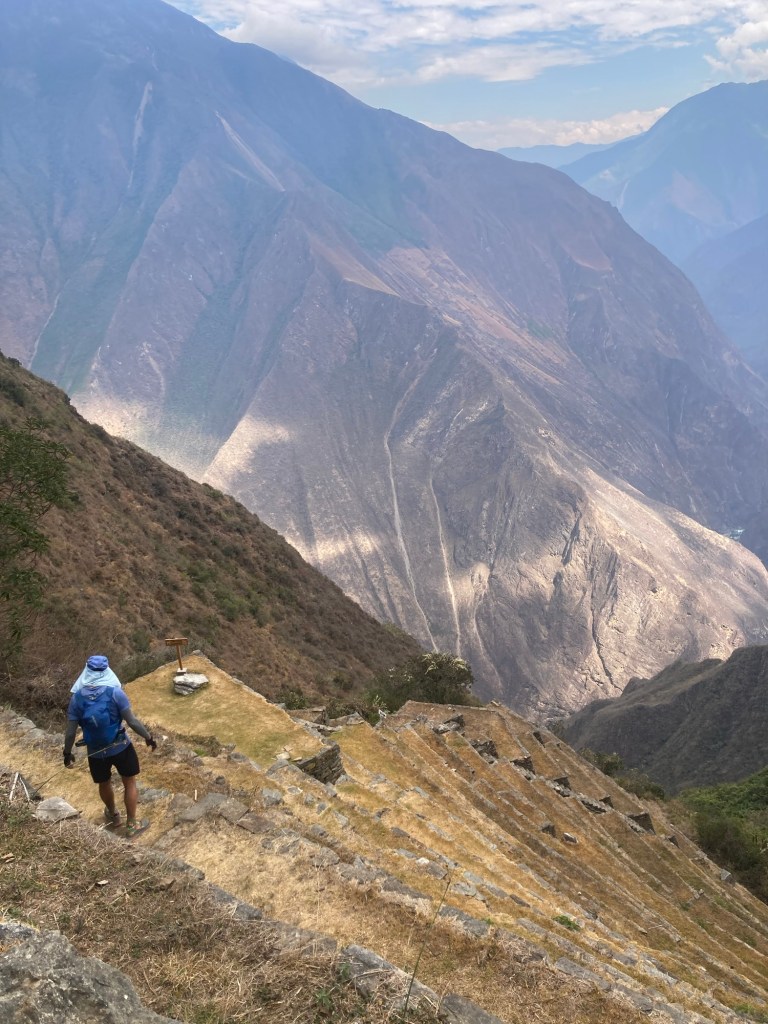
We finally got so far down that we could no longer see the men up above. We had reached the llama terraces! The llama was a sacred animal to the Incans, as they were used for transportation, wool, and sacrifices to the gods. It is speculated that these white granite llamas artistically laid into the terraces may also have had spiritual significance and perhaps were placed as an offering to the gods to promote agricultural fertility and prosperity. It is difficult to see the enormity of the terraces when you are close up. Thankfully there is a small trail that leads to a lookout point. It is totally worth the very small detour to see all the llamas from a distance!
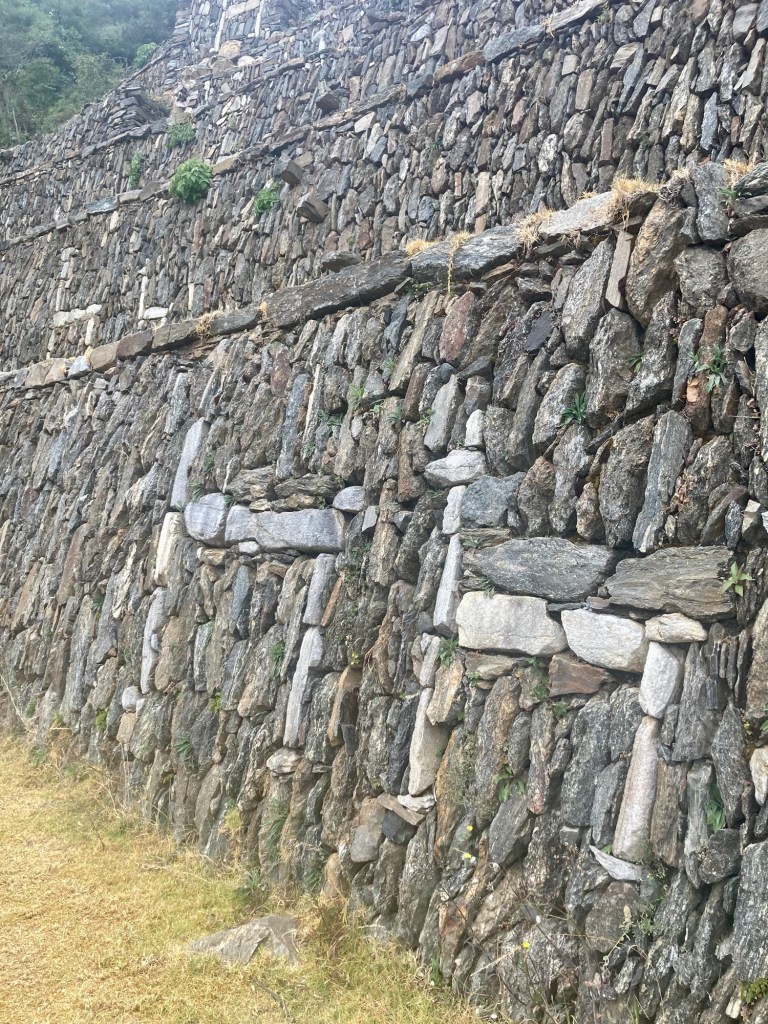
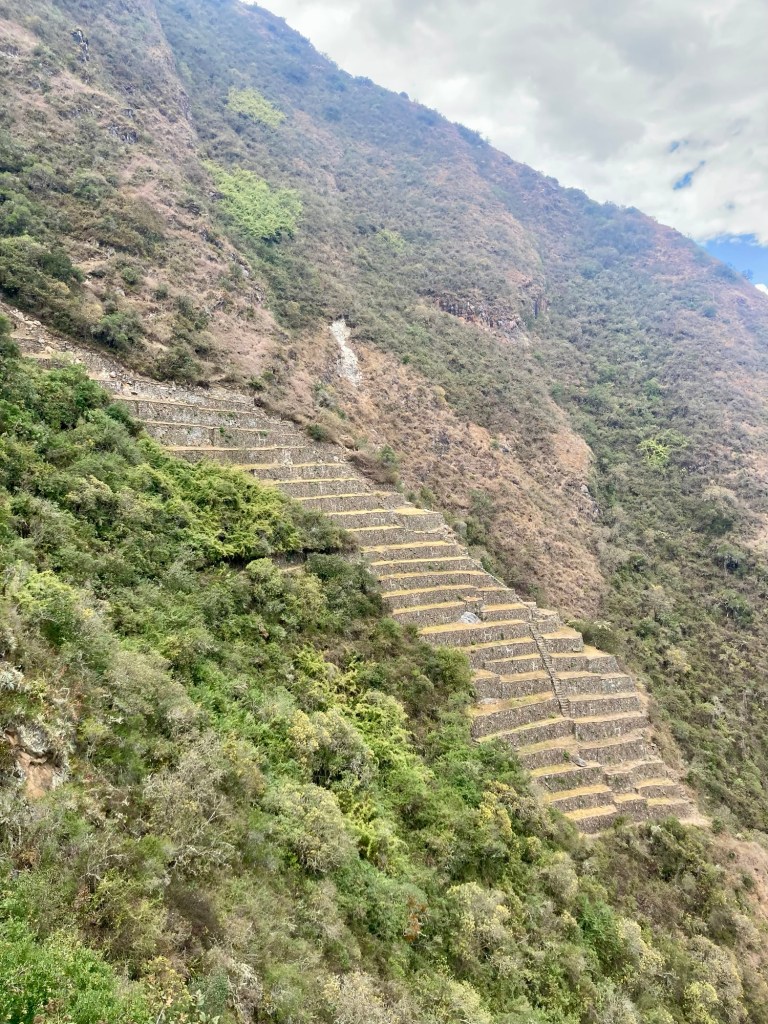
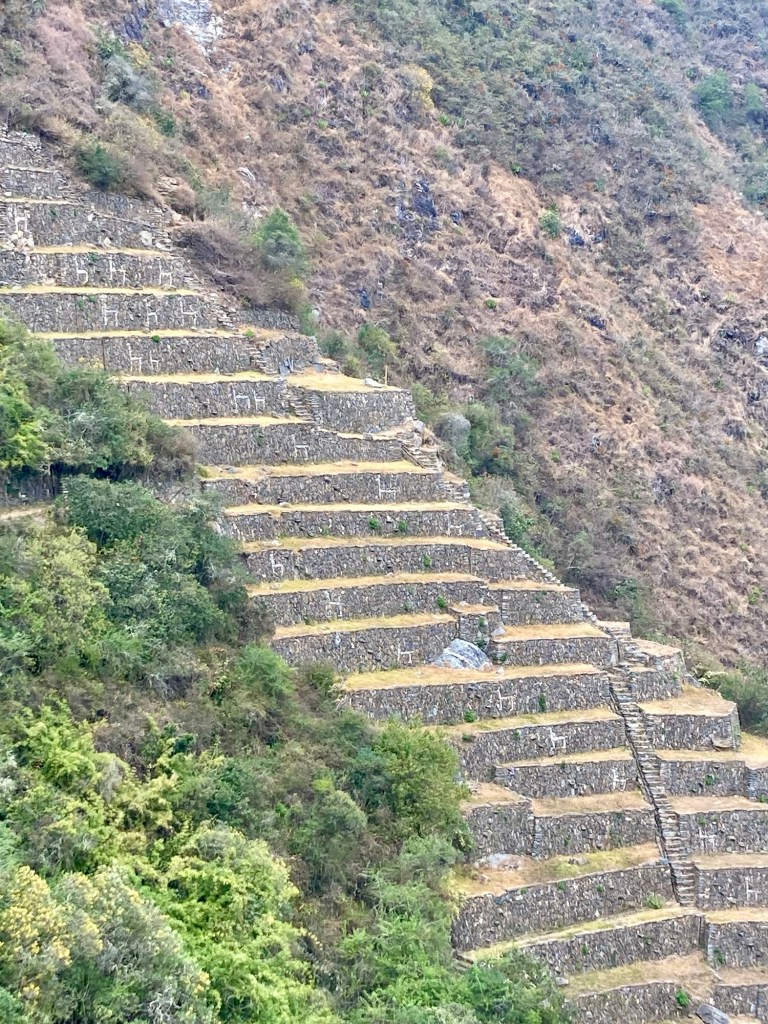
What goes down must go up, and now it was time to climb back up. This time we took the trail. The last big stop at Choquequirao would be the Ushnu, the ceremonial platform. Yuch commented that a lot of blood had been shed on that hill. I lay myself down in the middle and imagined what it would be like to be a human sacrifice.


At this point it was noon. It had been 3 hours since we had been in the park. If we left now we estimated we’d be back by sunset! It had taken us approximately 5 hours to get to the park and we estimated a similar amount back. But Yuch had a few more places in the park that he wanted to visit: the house of the priest, Paraqtepata, and the Casa de la Caída del Agua. The house of the priest was easy, since it was on the way.
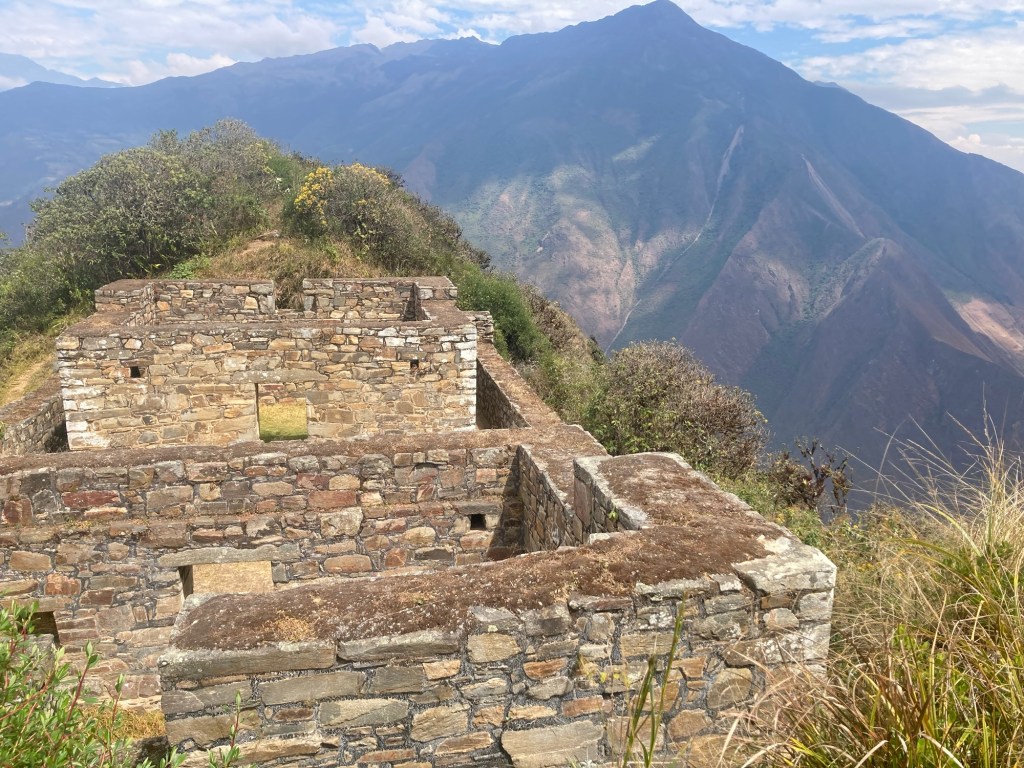
The latter two definitely added an additional hour on to the trip and a lot more vert. From the Casa de la Caída del Agua you can (obviously) see the Paqchoyc waterfall across the way but the only other views are of the trail itself, in addition to Marampata. Other than these views, you will find a zillion more terraces with steep steps. At this point we opted not to explore all the steps below. We had gotten sufficient vert!


We departed Choquequirao at about 1 pm. We had spent 4 total hours in the park and covered approximately 2k feet of vert. I had been eating along the way, but was completely out of water. I was ready to head back and fill up at the waterfall.
Leaving the park, we both agreed that we could have skipped the last two stops. Since this was likely a “once-in-a-lifetime” experience, we were glad that we saw the entire park. However, if I were to recommend to anyone else visiting I would say: you are not going to miss out by skipping them. The most impressive thing about those terraces at Paraqtepata and Casa de la Caída del Agua is not being there itself, but actually seeing the views of them from the trail.
We filled up all our soft flasks (I brought four 500 mL flasks and Yuch brought two + his bladder), and continued on hoping to reach Capuliyoc by an estimate of 6:40 pm.
Elizabeth had asked us to text her at all the villages along the way so she could get a good idea of when to send the taxi driver. We paid 10 soles for Wifi at Marampata and gave her the estimate of 6:40 pm.
As we descended towards the river, I observed Yuch going into “last 10k of a race pace”. He was moving very quickly down the steep descent. I could tell he was motivated to make good time. I was in agreement and followed closely behind. We ran into hikers on their way up who cheered us on. I guess they’re not used to seeing runners on this trail. A man named Hugo stopped and asked us if we were runners and told us he was running the Andes 30k. We took a picture with him and continued on.
Our goal to Chiquiska had been about 4 pm. Elizabeth had told us most hikers take about 3 hours from there to Capuliyoc. We thought we could do it in 2.5 hours. As we continued descending towards the river Yuch looked over at the zigzagging trailhead across the way and commented that he didn’t think there was any way we’d get there by 4 pm. There was too much descent remaining followed by a bunch of ascent. I told him to keep his eyes on the prize.
We got to Chiquiska around 4:15 pm. We again had to pay to use the Wifi. This time it was 5 soles. Good thing we had not needed to purchase any bottled water! We stuck with the estimate of 6:40 pm to Capuliyoc.
It had started to rain lightly at this point, but it was still warm. I had been pleased with the weather the whole day. It was partly cloudy which made for perfect weather. With clear skies at that elevation, the sun can really beat you down.
The ascent to Capuliyoc is much more runnable than the ascent to Choquequirao. Although there are steep sections, they are broken up with flat runnable parts. We took advantage of the runnable parts so we didn’t have to push ourselves too much on the climbs. I was surprised at how many hikers we saw descending at this time – late in the afternoon. I figured they would probably stay the night at Chiquiska.
The scenery was beautiful, very different than the other side of the river. We hadn’t seen it before because it had been completely dark on our way out.

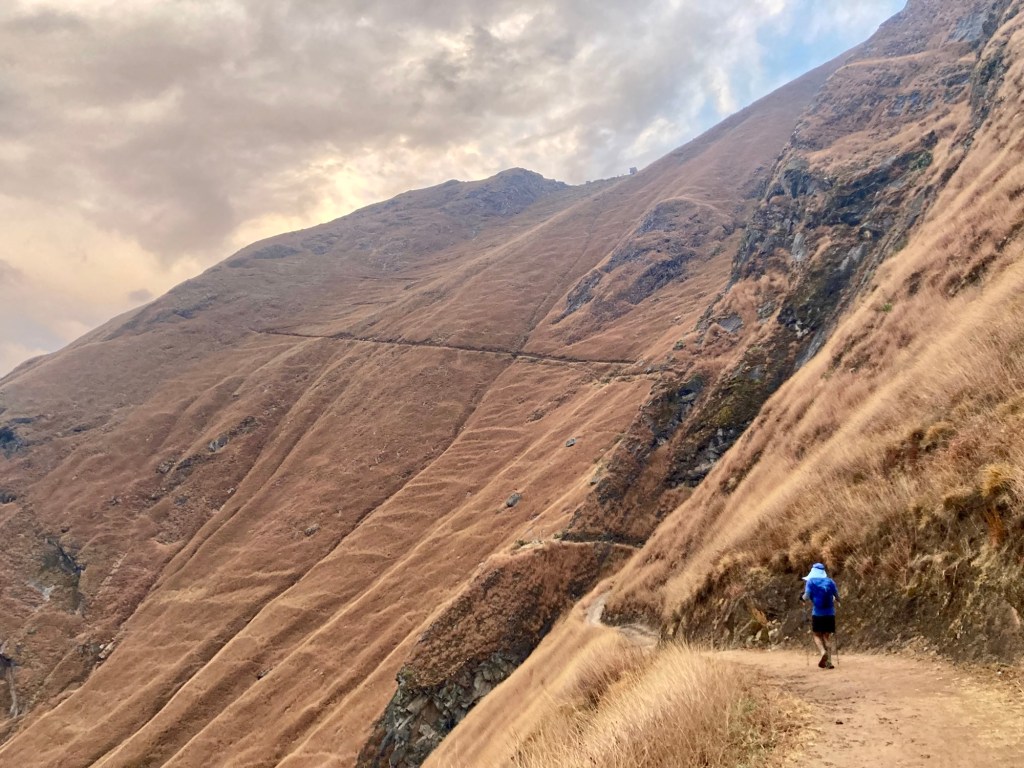
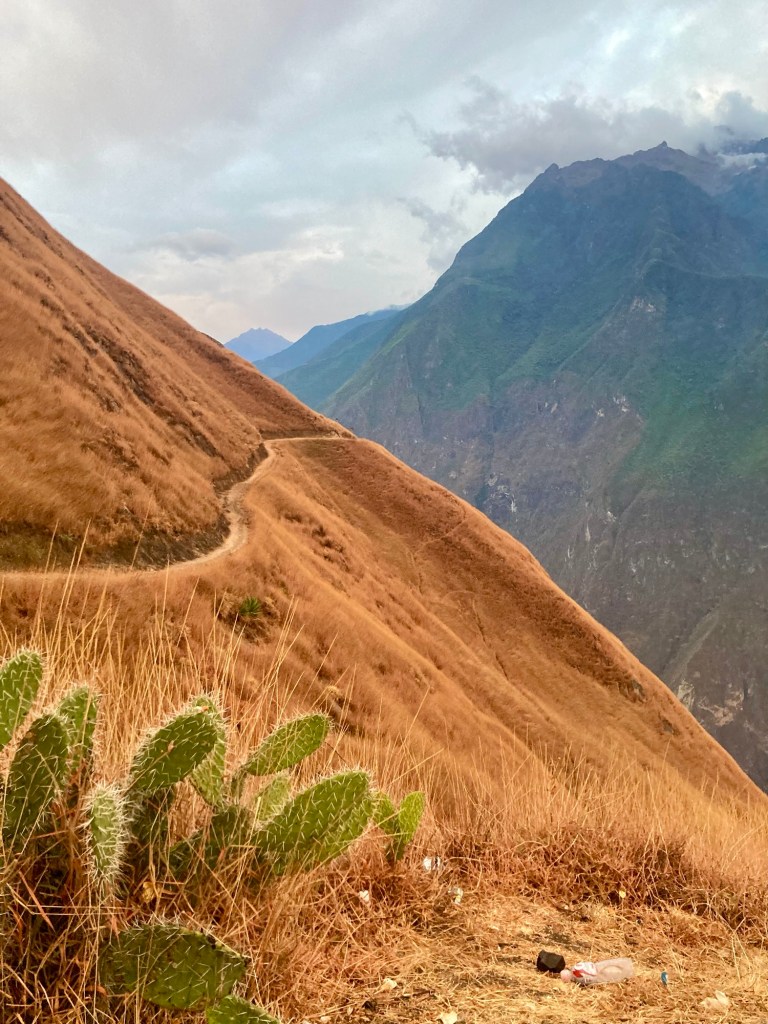
When we could finally see the zigzagging single track ascending to “the top”, Yuch really physically and psychologically slowed down. I could hear a lot of noises behind me. To him, the sight of that ascent suggested “a long way to go”. To me, I found it very motivating to know how close we were to the top. I pulled ahead and kept hiking briskly hoping he would hang on. The sun was getting very low and I wanted to see how far we could get before taking out our lights.
Yuch was not keeping up with me and in fact was pulling away. He shouted to me that he was getting really weak and needed to stop and take a break. We are SO close, I thought! I knew he had been eating and drinking well along the way, but he hadn’t gotten very much – if any – sleep the night before, so it was possible that he was more sleep deprived than anything. I told him, ok – let’s take a break. We’ll get out our lights and eat some sugar. We put our light-belts on and he ate some dates. We continued on.
We let out a huge sigh of relief when we reached the top. It wasn’t too far from the trailhead now and it was pretty flat. We wondered if someone was finally going to ask for our money, but no one ever did. We arrived at the trailhead at about 6:35 pm to find our driver already there waiting for us.
We paid our driver 70 soles this time. We were grateful for his service and we were now 140 soles “richer” since we never had to pay the park entrance fee. After all our stress about not having enough cash, everything had worked out!
Returning to the Wooden House, it started to pour. We had finished just in time! The last hurdle that we didn’t know would be a hurdle was taking our showers. I had been looking forward to the advertised hot showers all day! But, as was the case with all our previous showers…this one was luke warm at best. I squealed and screeched as I did my best to clean all the parts, but after all was said and done, we were very glad to be clean and to put on warm clothes.
We got into our beds and listened to the rain pouring down outside, grateful to have successfully completed our journey. For me, dinner consisted of a Lucuma yogurt drink and a chocolate bar while Yuch snacked on nuts.
The next morning, Elizabeth made us a traditional Peruvian breakfast of eggs, avocado, and bread. Rolando picked us up around 9:15 am. We had previously agreed on 10 am but we’re pleasantly surprised at the early arrival since we were ready to go. We apologized for any confusion about the taxi to which he responded “no te preocupes”. In the end, Yuch tipped him again for the second leg. For the next 24 hours or so we figured since we evaded the Choquequirao park fee, the least we could do is give it back to Peru in good tips.
Final thoughts and tips on running Choquequirao:
- Total distance ended up being 31 miles and 14,500 ft of gain. 7 of these miles were within the park itself.
- Total time on trail: 14 hours, 14 minutes.
- If you are an ultra runner, this can absolutely be done in one day! In fact, if you are an ultra runner you should absolutely put this on your bucket list. This adventure was MADE for trail runners. It would be difficult and inefficient to cover all of Choquequirao without running.
- Many Peruvians that we had told that we were going to do this in one day didn’t totally believe that we could. One person told us we wouldn’t have time to enjoy the park. In the end, I believe we spent more time in the park than anyone we saw that day. We observed people arriving after us who left earlier.
- If you are running this, you can filter all your water from the waterfalls and streams on trail (just probably don’t filter from the river)
- Bring more cash than you think you will need! The tiny town of Cachora is not set up to take credit cards snd definitely does not have ATMs. Relieve yourself of any stress of not having enough cash. And remember that just to use WiFi will cost you some money!
Choquequirao is probably one of Peru’s best kept secrets. The cable car to the park has now been approved but it will probably still be some time before people can visit Choquequirao without having to trek 24+ miles to do so. There are pros and cons to this. Some say that if tourists can easily access Choquequirao, it will reduce the numbers of tourists at Machu Pichu. However, building a cable car to Choquequirao would also mean that all the villages along the trail would lose the majority of their income. My opinion is that if you can, you should make this epic trek now. The challenging journey to and from Choquequirao will make it even that more rewarding!


