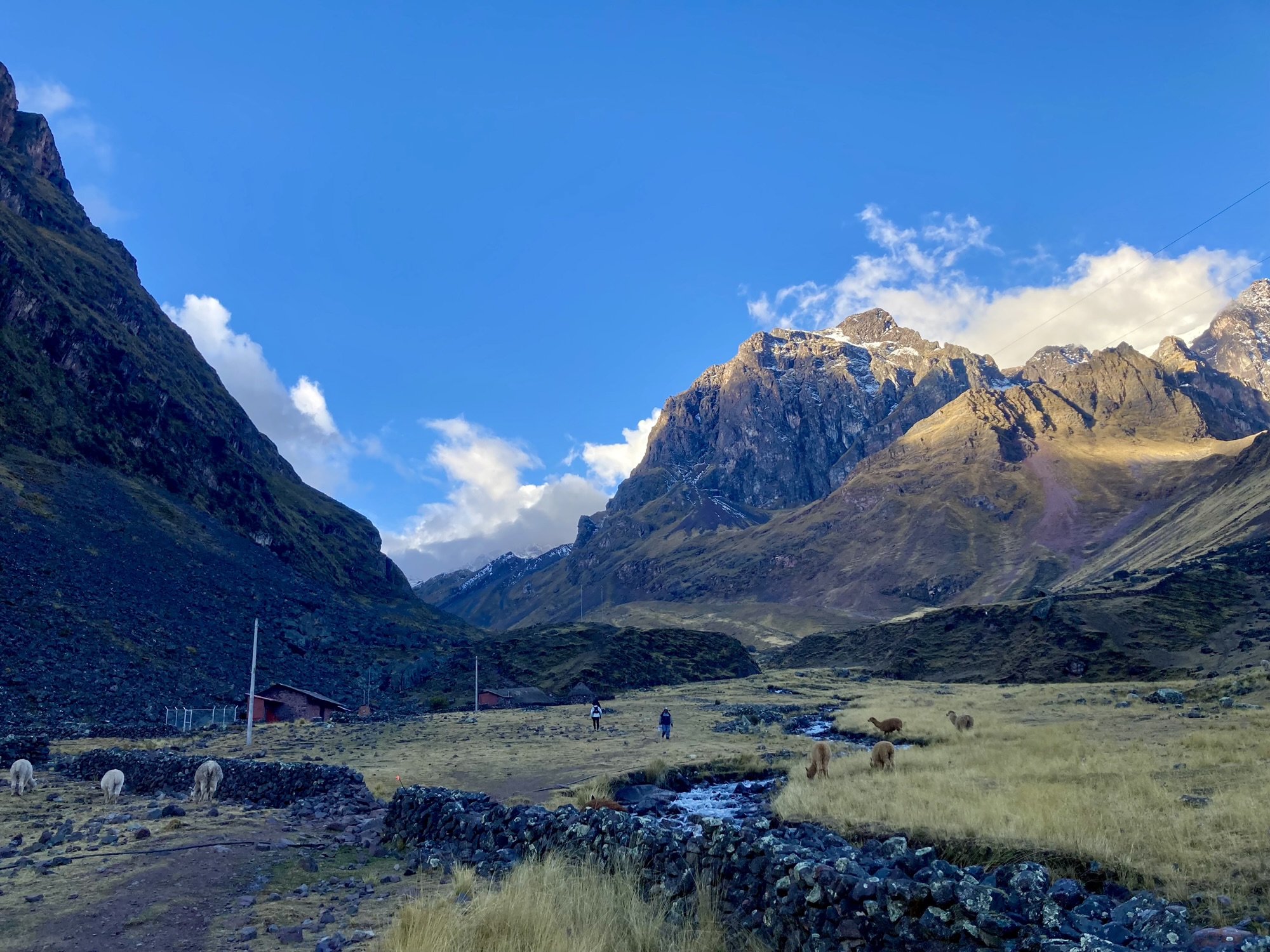
The Andes 101k is considered one of the toughest races in the world. It has approximately 18,600 ft of elevation gain in 63 miles, with the lowest point on course at approximately 10,000 ft and the highest point at 15,500 ft. It takes place in August during the Peruvian winter time aka the “dry season” which means intense sun during the day and very cold nights. The 3 pm start time means runners will only get 3 hours of daylight in before heading into the dark and cold for the next 12 hours.
I first heard of the Andes 1001k from an article in Outside Online. The title read something like this: “This epic ultramarathon has more llamas than runners”. It talked about the inspiration behind the race; Incan messengers called chasquis who collectively traveled up to 200 kilometers on foot to deliver messages. With no written language, these messages were often in the form of tied knots. Each chasqui would cover 6-9 kilometers before passing their message on to the next chasqui. In this way, information could travel up to 200 kilometers in one day. Rich in Incan history and soaked in local tradition, this race immediately planted itself on my bucket list.
After 3 years of heading to Italy for the Tor des Geants, a race that had taken a firm grasp of our hearts, Yuch and I decided it was time for something very different. We decided it was time to go to Peru! I had gone for the first time in 2018 with my sister, cousin, and aunt, but had always wanted to go back with Yuch. I especially wanted to spend more time in Cusco and the Sacred Valley.
We arrived to Peru two weeks before the race. At this point I was pretty much in “taper mode” aside from a couple of long runs we had planned at altitude. An unusual taper, but in the end it all worked out! The first few days were spent in Arequipa at 7,660 ft. This is a great place to start acclimatizing if you are coming straight from sea level. We did a very short sightseeing run in Arequipa to break the ice. Arequipa is a beautiful city and you really can’t go anywhere without seeing its 3 volcanoes – El Misti, Chachani, and Pichu Pichu.
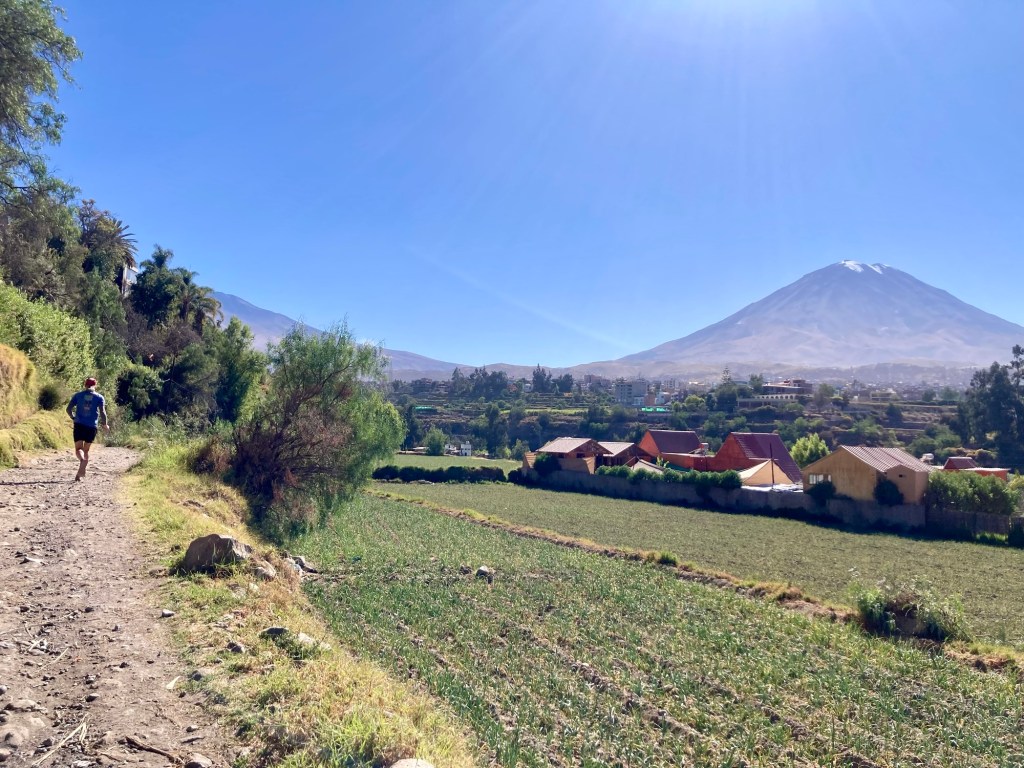
We then headed to Cabanaconde at 10,800 ft and ran an 18 mile loop in the Colca Canyon. This was a great first run at altitude to do. We took it fairly easy but got some good time on feet in. Afterwards, we headed to Cusco which sits at approximately 11,150 ft. We ran 31 miles to, from, and in Choquequirao, getting some more solid time on feet at higher altitude. Moving at altitude still felt hard, but I could tell it was getting easier. Outside of a ton of walking and sightseeing, these were the only 3 runs I did in the two weeks prior to race day.
The Andes 100k is a point to point race. It starts in a town called Huaran and ends in Ollantaytambo. The race organizes busses to transport runners from Cusco to Huaran before the race as well as back to Cusco from Ollantaytambo afterwards. We decided to stay in Ollantaytambo and catch a ride to the start. That way we could stumble to our Airbnb after the race. I highly recommend this option!
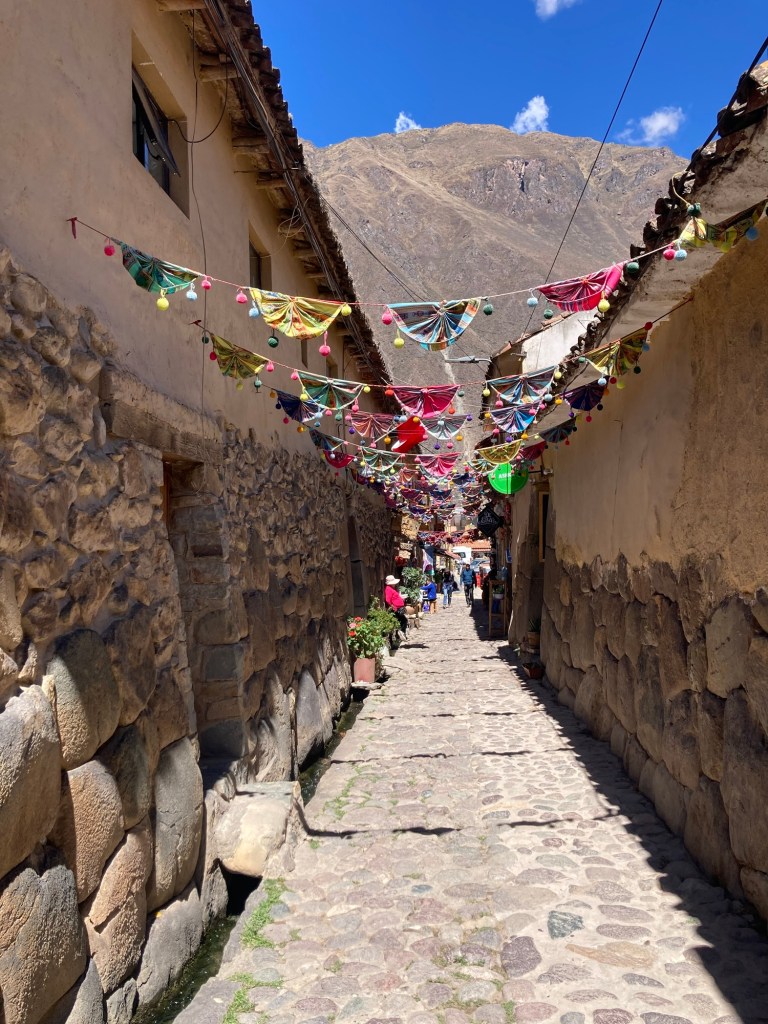
Ollantaytambo is a beautiful town in the Sacred Valley that is rich with Incan history. Aside from the ruins there that are commonly included in the Sacred Valley/Cusco ruins tour, the town itself is one big Incan ruin. The original grid work that the Incans built for the town still exists in addition to much of the foundational stonework and canals. It really is quite beautiful and special to stay in a neighborhood with so much history. Sadly, in 2018 our tour group only toured the main ruins in Ollantaytambo and the tourist market so my previous experience in Ollantaytambo had been reserved for the “tourist” attractions only.
We arrived to Ollantaytambo on the Wednesday before race day (Friday) via a bus from Cusco. That morning we had stopped by the “bib pickup” in Cusco although they called it “Kit delivery” so we nearly missed picking up our bibs.
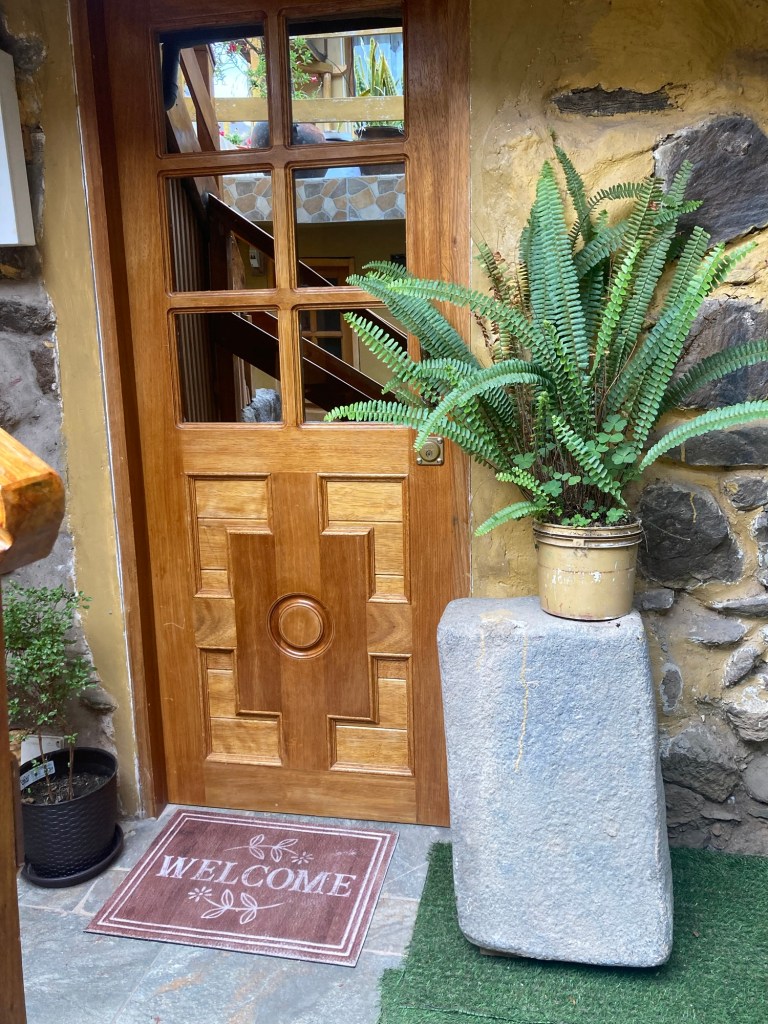
In Ollantaytambo, our Airbnb was just minutes from the main square, had some original Incan stones inside the premises, and had a great view of the mountains from the second floor. That night we ate at a vegan restaurant around the corner from our place. Did I mention that we have eaten 100% vegetarian and vegan this entire trip? Do not be afraid of Peru if you are either. The food and restaurants are excellent.
The Thursday before the race we did very little other than organize our packs. Despite being at much higher altitude than the Tor and having much more extreme temperature ranges, I was surprised at how minimal the gear requirements were. That being said, my pack was still very similar to what it looked like at the Tor. The main difference was that the Andes 100k required the following items that I have never seen on a prior required gear list for a race: a mirror, a rear red blinky light, and a pocketknife. We had purchased the first two on Amazon prior to our trip, but unfortunately both of our pocket knives had been confiscated at various points on our trip (because knives are illegal to bring on planes, people). I vowed to not spend any more money on a pocket knife while Yuch was concerned that we wouldn’t be allowed to do the race without it. In the end we ended up spending 69 and 79 soles on two brand new Swiss Army knives from an outdoor store in Cusco. I loved my new shiny little pocketknife, but I knew I couldn’t get too attached as we would again be pulled apart after the race was over.
Friday morning we walked over to the square around 11:30 am with the plan of finding a ride on the spot. There are so many drivers that are looking to make some extra money. We knew we wouldn’t have a problem finding a ride to Huaran, but we also wanted to make sure we left a sufficient buffer. As soon as we walked into the square, we were approached by someone. And just like that we had a ride.
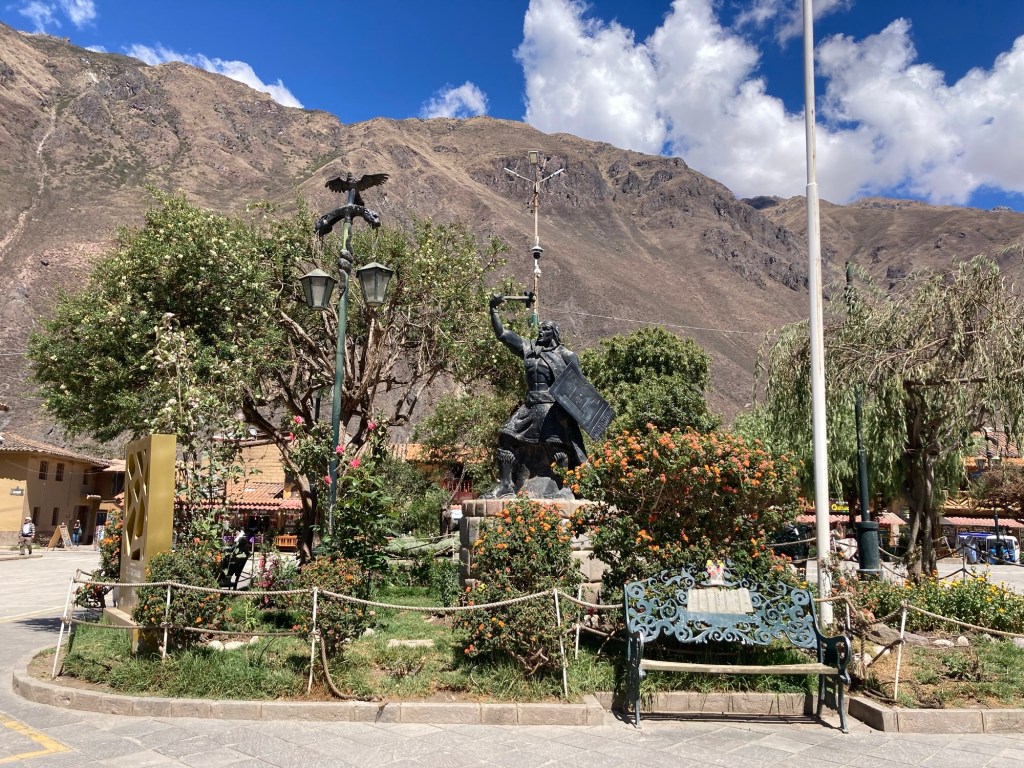
We arrived to the race start around 12:30, a whole 2.5 hours prior to race start. The “start” was essentially a house/villa with a bunch of runners hanging out, putting on sunblock, and organizing their packs. This is a tiny race and I would soon learn that there were only 4 women doing the 100k. I wasn’t sure if I should be excited or scared. I had a lot of fear going into this race that is now hard to explain after the fact. Probably it had to do with going into the “unknown”, a place that some people find exciting but for me; terrifying. I kept reminding myself that I’ve done the Tor, that this was nothing compared to that, but then I would remember that I’ve never been to anything higher than Mt. Whitney. What if I couldn’t handle the altitude and got HAPE (high altitude pulmonary edema) or what if it was so cold and my gear wasn’t enough to keep me warm? What if I was alone the whole race and got into a precarious situation? With such a small field I was surely going to end up alone. Yuch shared some of my concerns. While we hoped that at some point our paths would converge, we agreed that we should run our own races. There would be times when one of was stronger or weaker and it didn’t make sense to always be going the pace of the LCD (least common denominator).
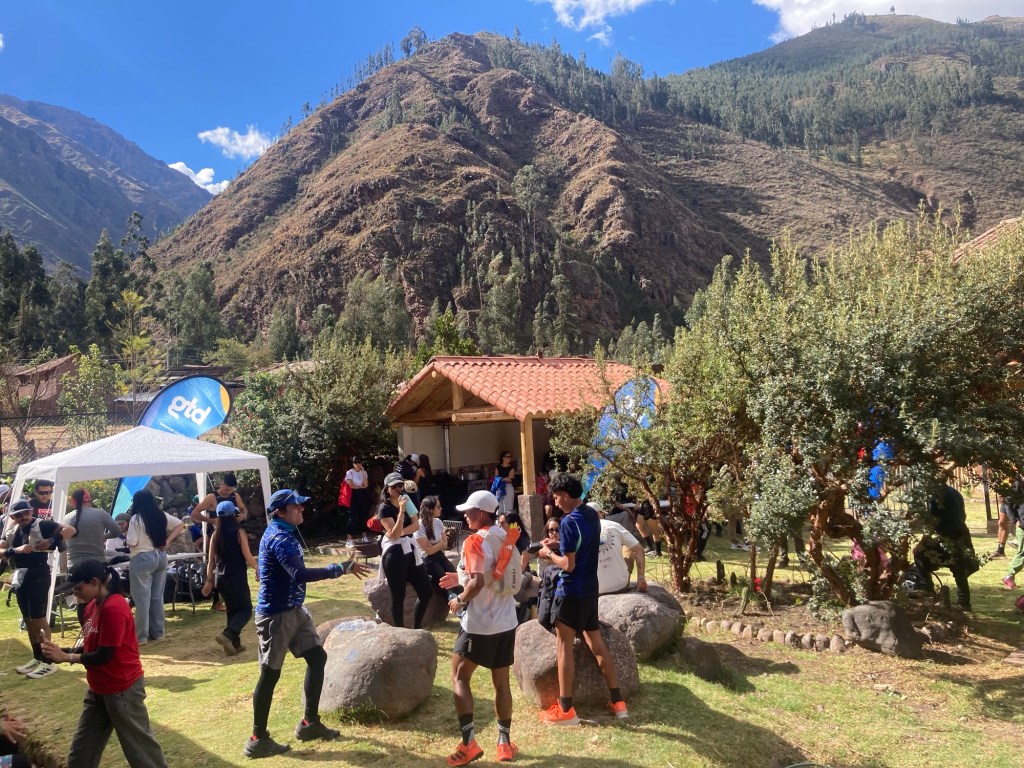
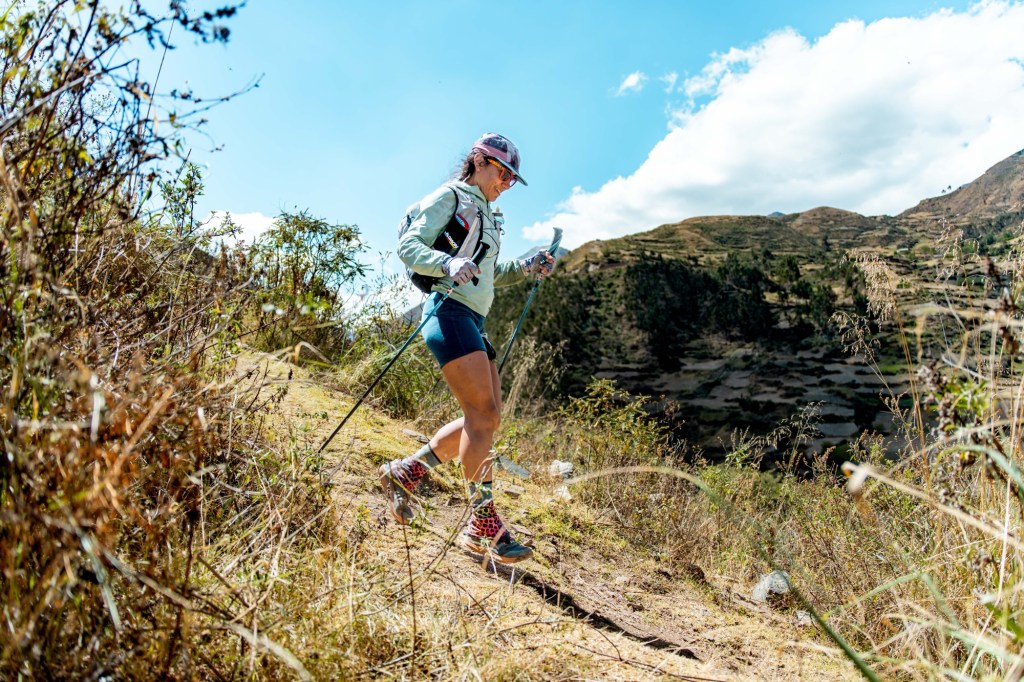
The race started at 3 pm and we were off. The course climbs 5,500 feet in the first ten miles with the first climb to Pachacutec at 15,500 ft. It started gradually on a wide fire road, yet running at altitude still felt difficult so I alternated between a jog and a hike; a jog when it was truly “runnable”, a hike with any increasing grade. I tried to keep up with Yuch but it was not possible. His jog/hike pace was clearly quicker than mine. I finally let go of the idea of hanging on to him. I would have to do this on my own.
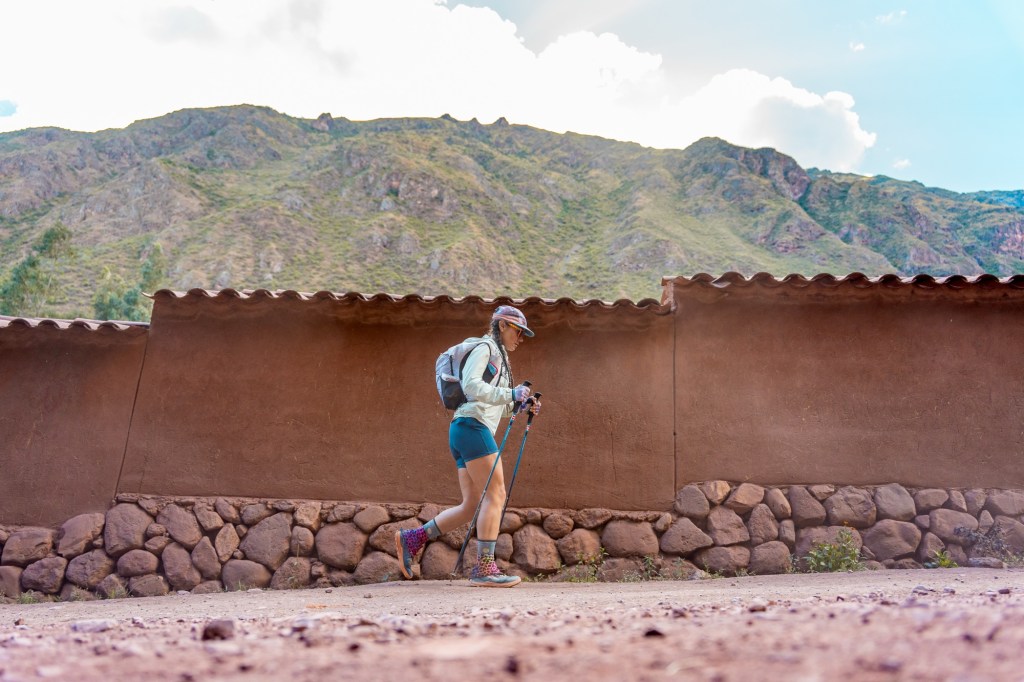
The first water station at Cancha Cancha surprised me. I had noted that there were aid stations every 20k until the 60k mark in which aid stations would be every 10k. However, I failed to note the water stations in between aid. Peruvians dressed in traditional Andean clothing were filling up runners water bottles, and families sat along the course spectating. I got my bottles topped off despite hardly drinking much for the last two hours. It had been slightly overcast to this point and now at 5 pm the sun was starting to get lower. It was starting to feel cold.
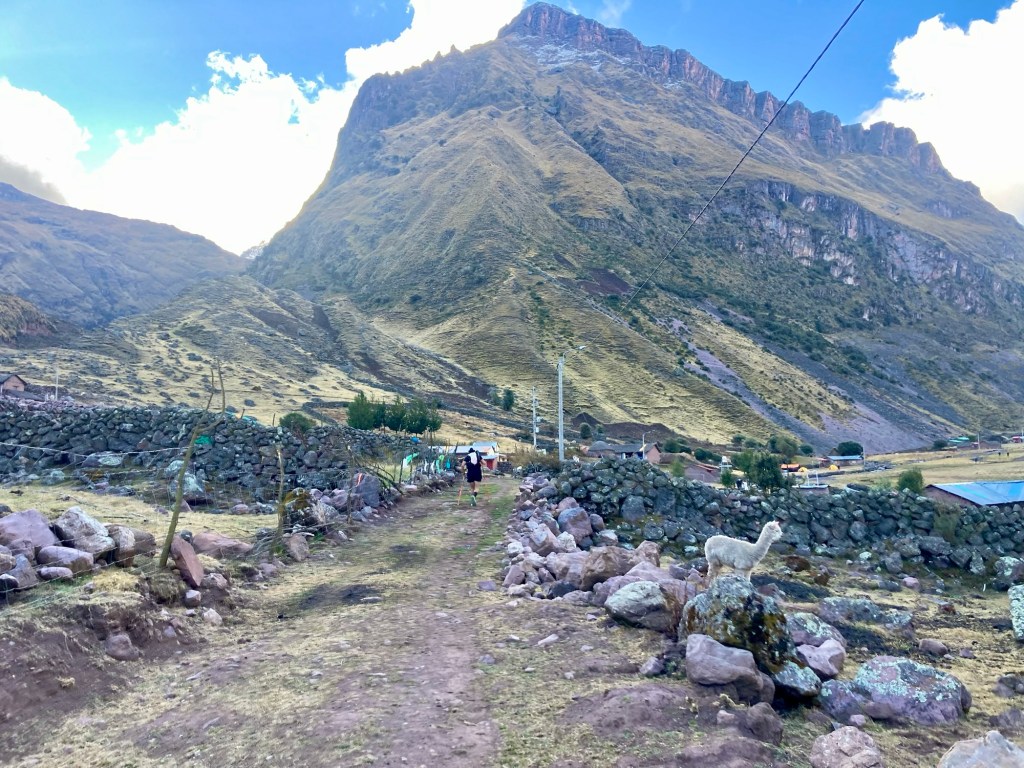
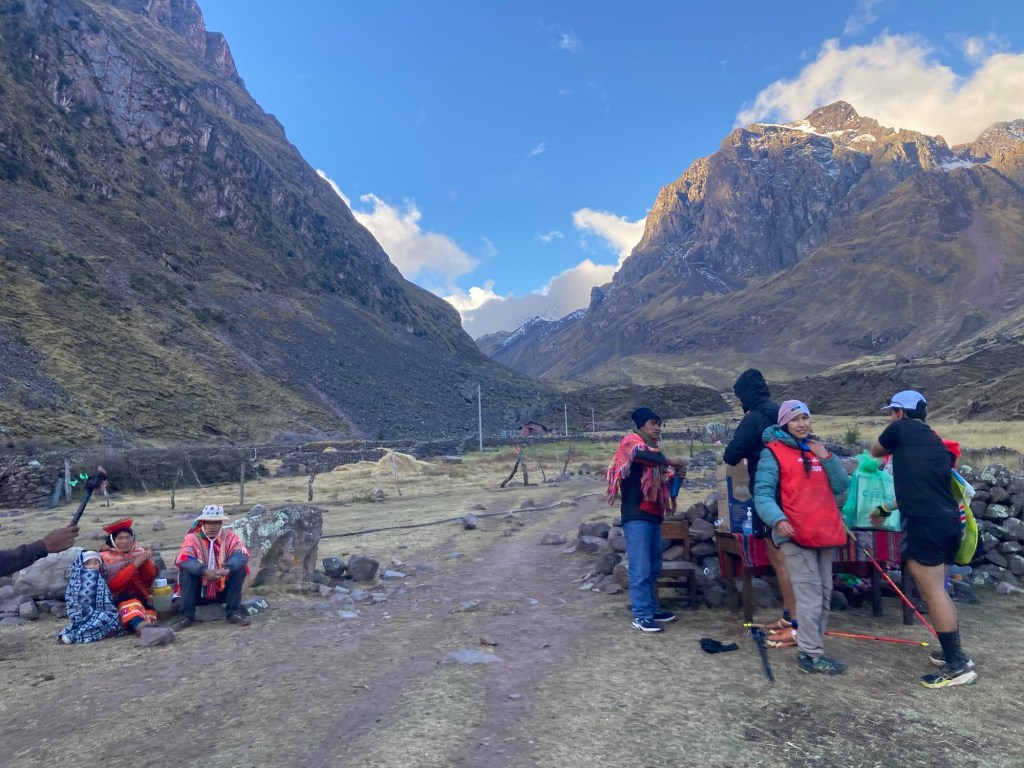
Shortly after leaving the water station I pulled aside to put on more layers. It would be one more hour until sunset and we were about to climb to the highest point on the course. I took my shoes and gaiters off and put my leggings on over my shorts. I put my smart wool base layer on followed by my down jacket, rain jacket, gloves, and buff. I basically had all my warm gear on.
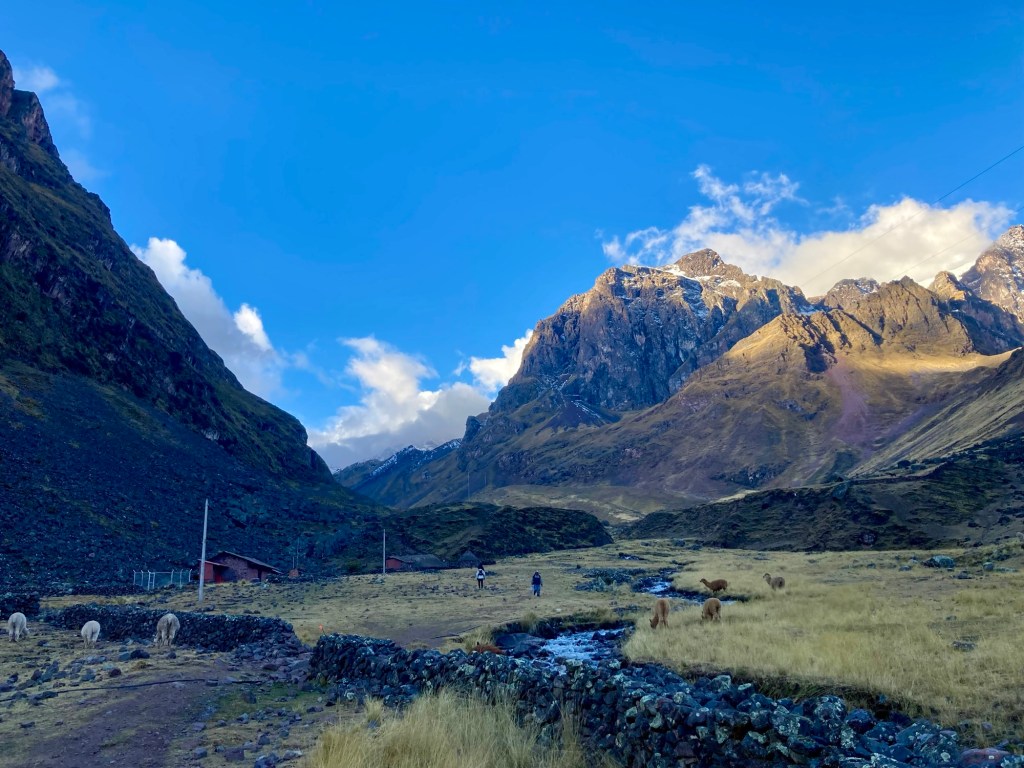
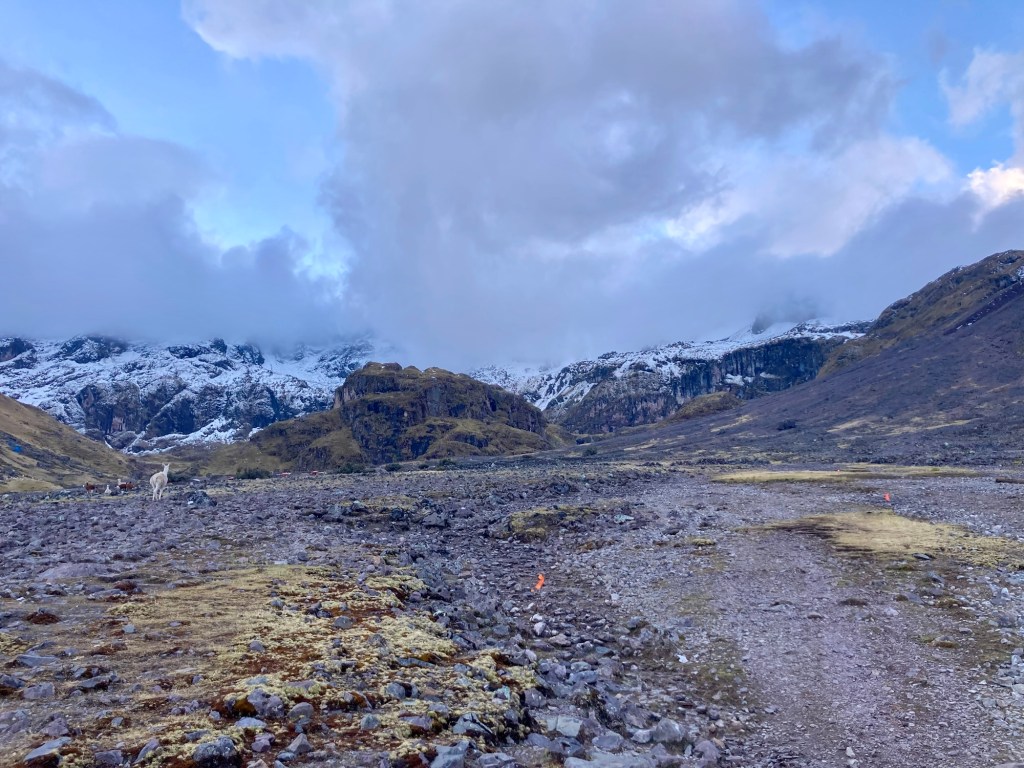
The ascent to 15,500 feet was beautiful. Snow surrounded the sides of trail but for the most part the trail was snow free – just muddy. As it got closer to 6 pm I took out my light belt. The summit was slightly anticlimactic as far as altitude goes. I didn’t notice a huge difference in my breathing, maybe because I was just going so slow in general. I lost sight of the race ribbons a few times and had to backtrack. At this time, I teamed up with two other Peruvians who had done the 60k the previous year. One of them, Jorge, spoke English but I still tried to practice my Spanish with him. A lot of our conversation was me speaking in Spanish and him speaking in English. Having been previously fearful of going into the race alone, it felt comforting to have a couple of newfound allies.
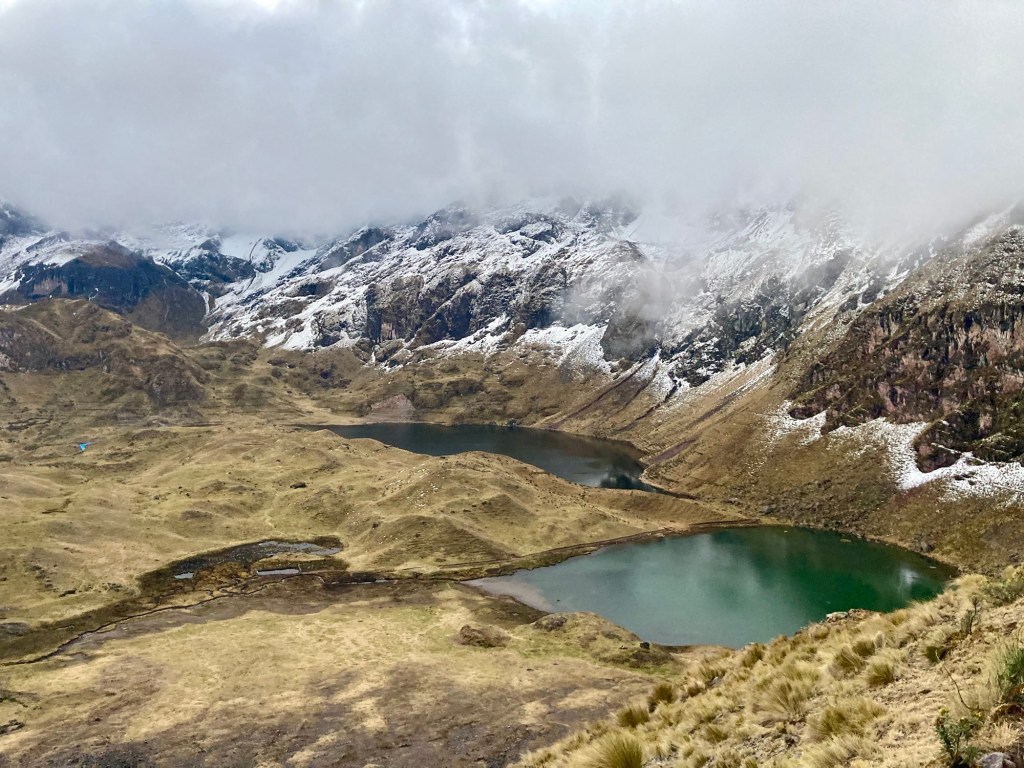
On the descent down to the first aid station it felt noticeably good to come down in altitude. I noticed myself getting warmer and starting to sweat but couldn’t be bothered to take off any clothing. I wanted to keep the downhill momentum going. This attitude would also affect my fueling. I had been eating some but not nearly as much as I would normally in a race. I had planned on relying heavily on aid stations although I had my pack stocked with various bars, cookies, and sweet bread. I would wait until I got to the first aid station to eat some real food there.
I reached the first aid station at Quishuarani, 22 kilometers in and now back down to 12,500 ft. I cursed myself for not stopping to take any layers off because everything was now sweaty and damp. I started to take everything off and the race organizers repeatedly asked me if I was okay and if I needed anything. Yuch and I would observe throughout the race how diligent the organizers were about checking in on runners safety. Despite having so much fear going into the race, I felt really safe the whole time and even safer knowing I was being looked after. As best as I could I tried to ensure them I was just “mojada” (wet), because I didn’t know how to say I was sweaty. In the end, I only ended up taking my undershirt off thinking it was the most damp, and putting everything else back on. I had some soup and instant coffee (although I really didn’t need the caffeine this early on) and continued on wondering how far ahead Yuch might be. I briefly paused at a fire pit with locals huddled around and warmed my hands for five seconds knowing I would be going back up into the cold, this time with sweaty clothes.
The second ascent up to Hulliquisjasa was short and steep, about 3000 ft of gain in 3 kilometers. I caught up to my Arequipan friend, Jorge, just as he let out a loud “Fuuuuck!”To me, this was just a tiny snippet of the Tor, nothing more – power hiking under a beautiful night sky lit up by a thousand stars. I decided to practice my Spanish. I told him that when it got hard, I liked to remember why I do these things – to be in a beautiful place surrounded by beautiful things such as the night sky.
The descent to the next aid station dropped us over 4,500 ft in about 15 kilometers. Hulliquisjasa had been at approximately 14,500 ft and the next aid at Lares would be just under 10,000 ft. On the descent I saw a light ahead of me and recognized the gait of the runner to which it belonged to. It was Yuch! I was beyond ecstatic and we ran into the 40k aid station together.
At the Lares aid station I felt like a celebrity. People were photographing and filming us. A woman asked me what my name was so she could tag me on Instagram. I don’t have Instagram so I told her my name and she would end up referring to me as “Megan Konon” in a Facebook reel. Yuch told me he was feeling pretty wasted already 40k in and that his stomach was inhibiting him from eating. We took our time enjoying the hearty aid station soup and had 2 cups each. If I was not going to do a great job eating on the trail I wanted to make sure I took my time at the aid station. We agreed that this quinoa and veggie soup was the best aid station soup we had ever had.
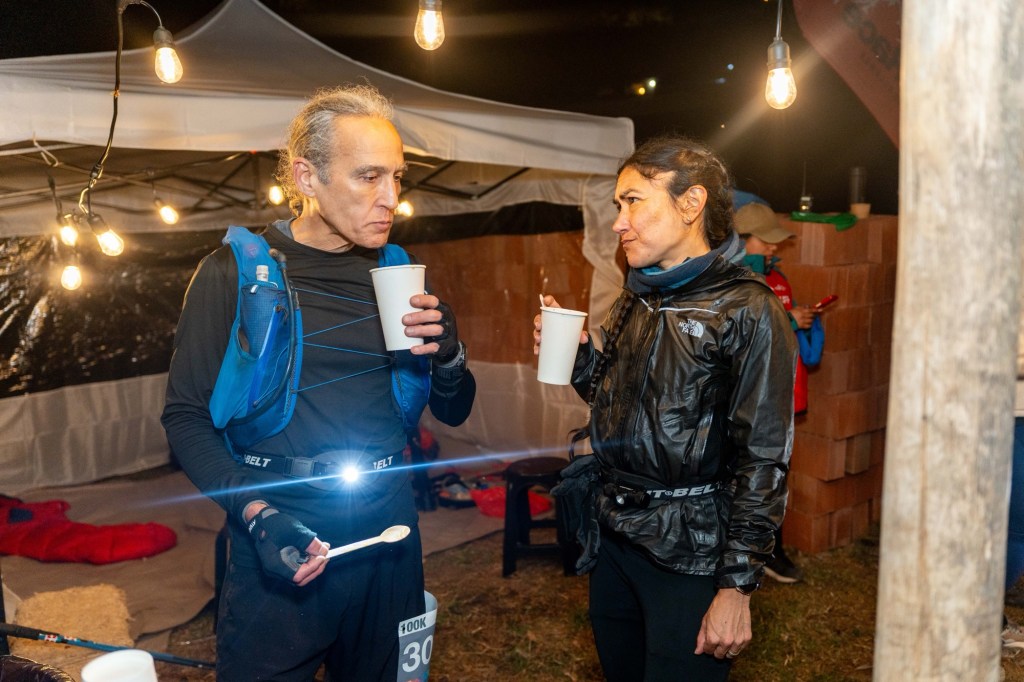
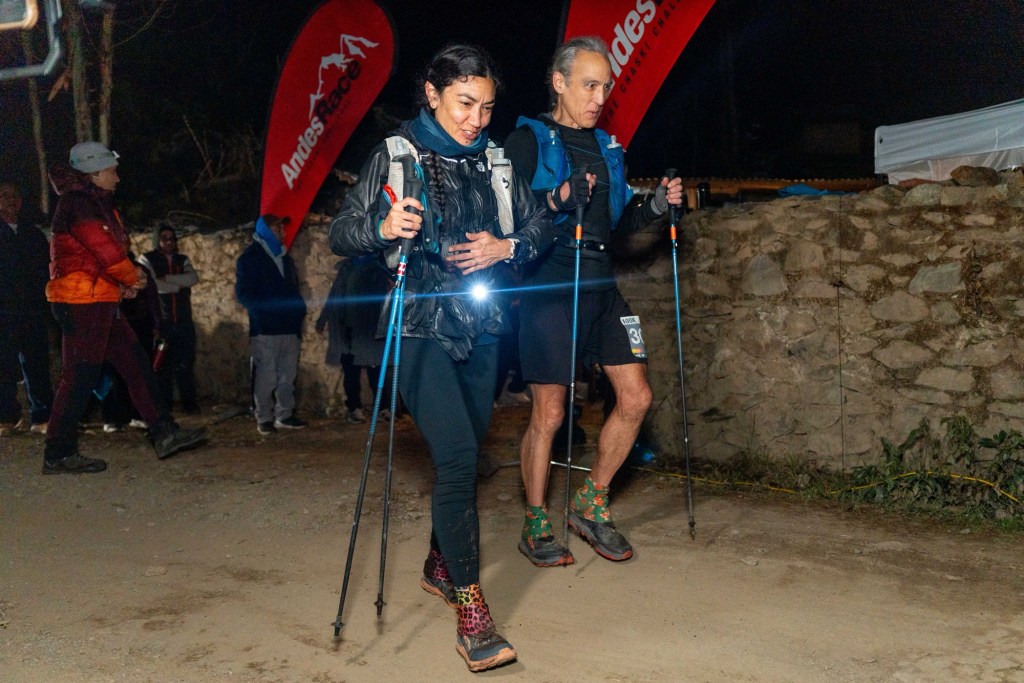
Although the race profile does not exactly show it, we had a nice long runnable section after this aid station. The race director had told us we had about 9k of runnable trail and then we should look out for a turn. After that he said it was downright horrible, or something to that effect.
It was clear when we got to the downright horrible section. We immediately starting climbing up the side of a mountain with no apparent trail, our eyes following the ribbons as best as possible. For whatever reason, the ribbons in this race are not as reflective as another ribbons I’ve seen at night. Yuch volunteered to lead and I was grateful to follow his footsteps instead of searching around for ribbons myself. In this first ascent we would climb 2500 ft in about 3 miles.
We knew we were climbing to one of the coldest spots on the course, Chupani, at approximately 14,000 ft. The race director had mentioned at the pre-race briefing (which we did not go to but I saw a snippet online) that it was estimated to be -5 degrees at Chupani (which I gathered to be Celsius). Although Chupani was not nearly as high as the first climb at 15,500 ft, we would be getting there at one of the coldest parts of the day; early morning.
We weren’t cold yet though because of all the climbing. In fact, we both had taken off our down jackets earlier and opted to hang them on the outside of our packs to dry out after being dampened with sweat from earlier on.
On the way to Chupani I would constantly ask “are we there yet?” especially when we got to a flat section which I thought might be the top. But we were nowhere near the top. It would be another 5 miles of climbing and course finding before we would reach the official aid station at Chupani, at 58k. Around this time we observed a number of fresh runners passing us, with the keyword being “runners” because we were walking now. We were later told that this was the 60k race which had started at 1 am. It started to get colder and we finally stopped to put on all our remaining layers. The only layer Yuch had left that he was not wearing was his pants.
We arrived to the Chupani aid station around 5:15 am. It didn’t feel like morning because it was pitch black and I’m not sure I had any concept of time having started this race at such an odd hour. The aid station was located in a nice closed building with a heat lamp. Yuch was still having stomach problems and now on top of that, he was shivering uncontrollably. We immediately got more of the quinoa soup to sip on and I added some potatoes to it hoping to bulk up my strongly lacking carb consumption. In the hot drink area they had hot water for instant coffee, coca and muña (mint) tea, and Milo (which I later learned is a Peruvian brand name for hot chocolate). I drank several cups of the tea and popped my first caffeine pill. Yuch was ahead of me on caffeine pills but they weren’t making a dent in him. He was exhausted, could not warm up, and still couldn’t take in much because of his stomach. He stood next to the heat lamp while I filled his soft flasks with hot water. He finally changed into his last layer, his pants. I ate some bread and cheese and lastly took some nuts and dried fruit for the road. We continued on into the cold.
As we descended from Chupani, we started to warm up. Yuch was so exhausted he urged me multiple times to go on without him but I refused. I never entered this race to compete. It was always the larger adventure and I loved that we were doing it together. I doubted my strength without him and also didn’t want him to lose hope. I’m sure he was more wasted than I could ever understood but having known and run with Yuch for a long time I also knew that he was stronger at that moment than he thought he was. I knew it would be dangerous for him to give into his “Central Governor” aka his brain, slow down, or worse – decide to drop out. I kept telling him he would feel better when the sun came up, but I wasn’t sure that was completely true.
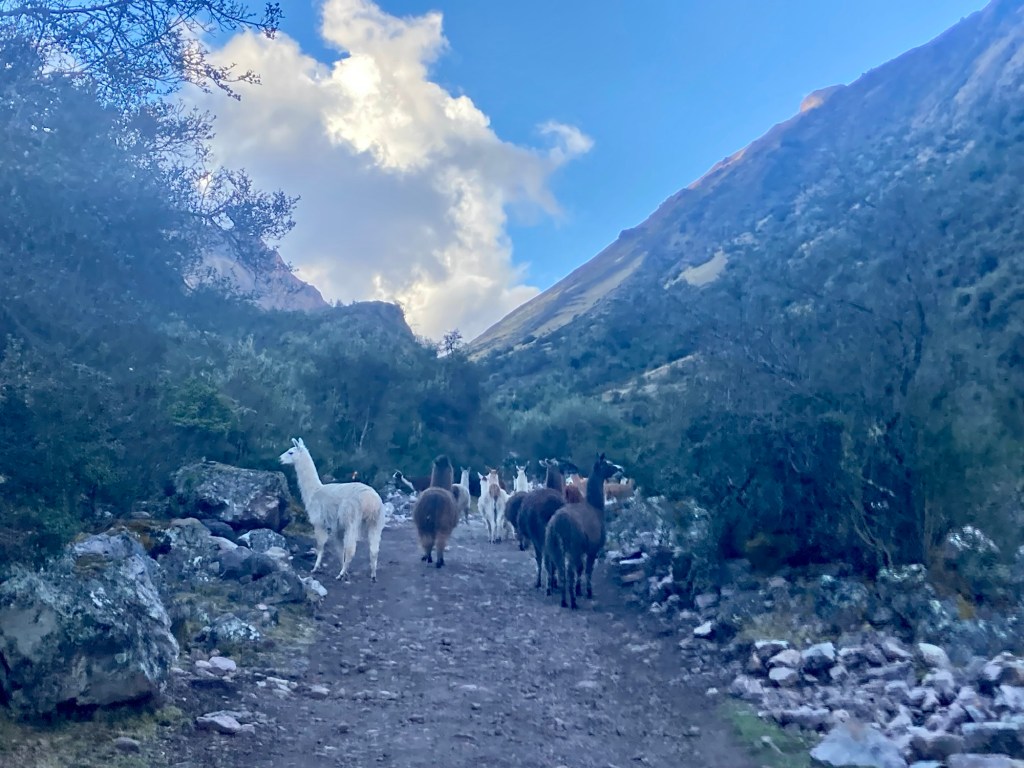
When the sun finally rose, we were eager to take off all of our layers. I have never worn pants for so long in a race before and was happy to strip down into my shorts and long sleeved sun shirt. We were now returning to “civilization” and passing by farms with llamas and alpacas.
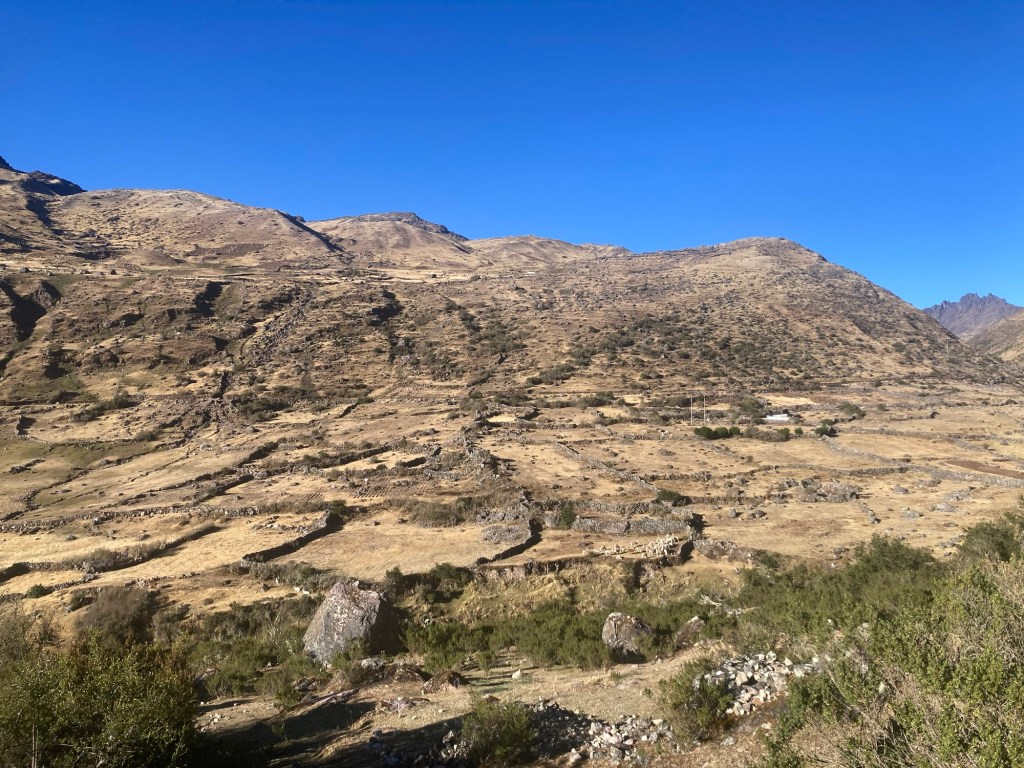
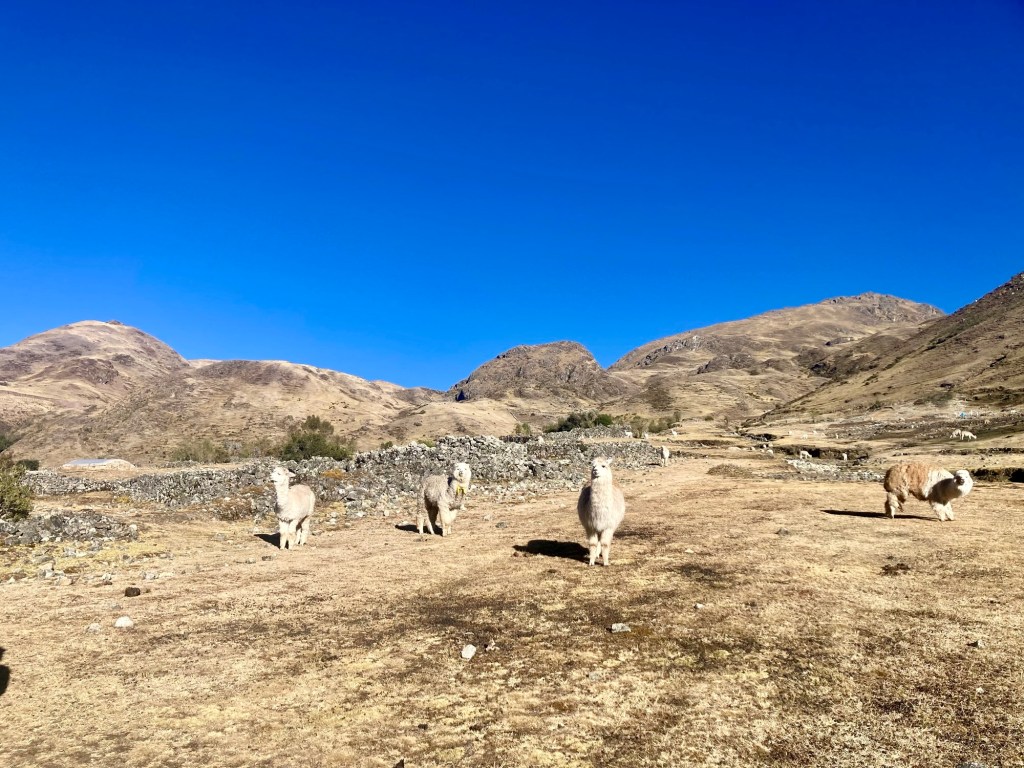
The next aid station was at Huacawasi (71k). Even though it was only 8 am, it was already getting warm! This was the most minimal aid station and we filled up on fluids and grabbed a couple pieces of banana and orange. I offered Yuch my last Tailwind packet since he still wasn’t getting sufficient calories in. One of the aid station volunteers spoke English and told us the rest of the course was the “fun part” and “Have fun!” In my mind, I imagined that we were approaching the home stretch and that it would all be literally and figuratively downhill from here.
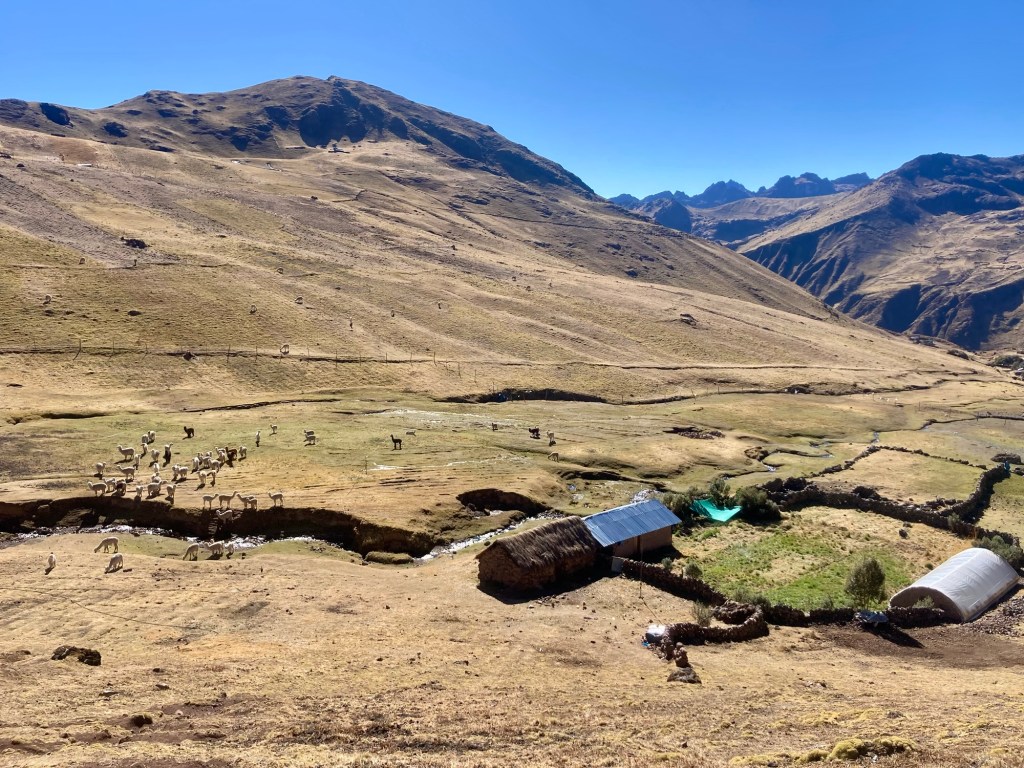
The last climb to Ipsaijasa was a scenic one. Llamas and alpaca grazed happily in the valleys as we made our way up and out. It was so beautiful I didn’t mind the work it took. Yuch continued to struggle, having a hard time processing how much climb we had left ahead of us. I continued to stay positive with the hope of battling his inner voice. I knew we just needed to get to the top and it would all be downhill. After all, the volunteer had said this was the fun part.
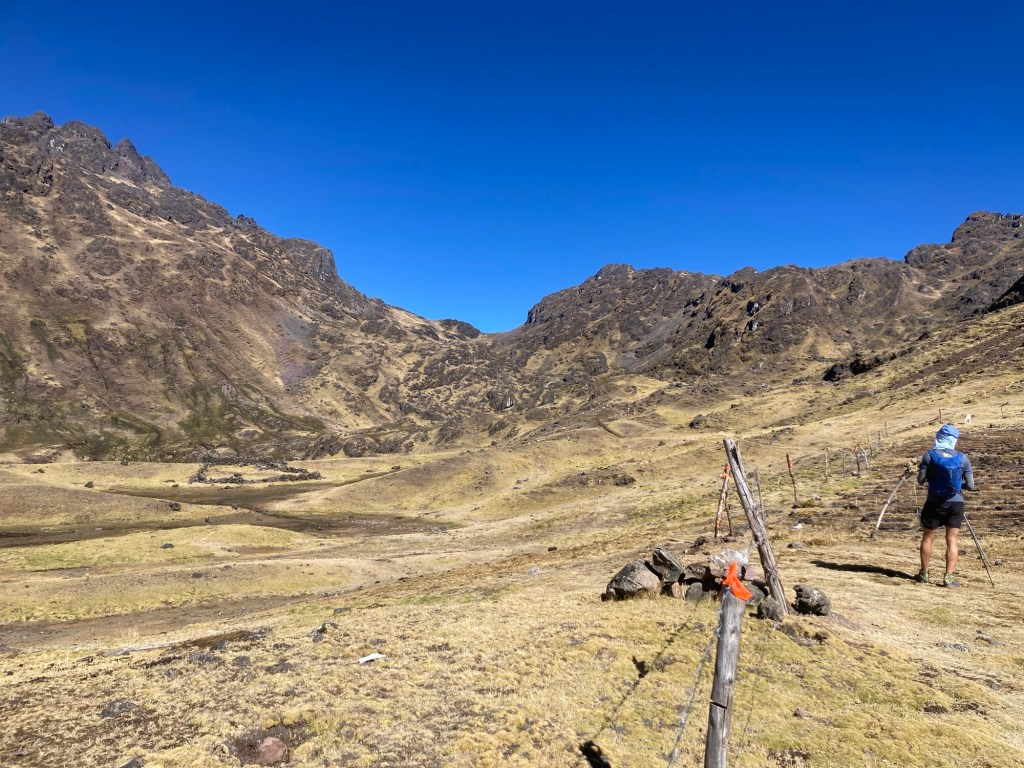
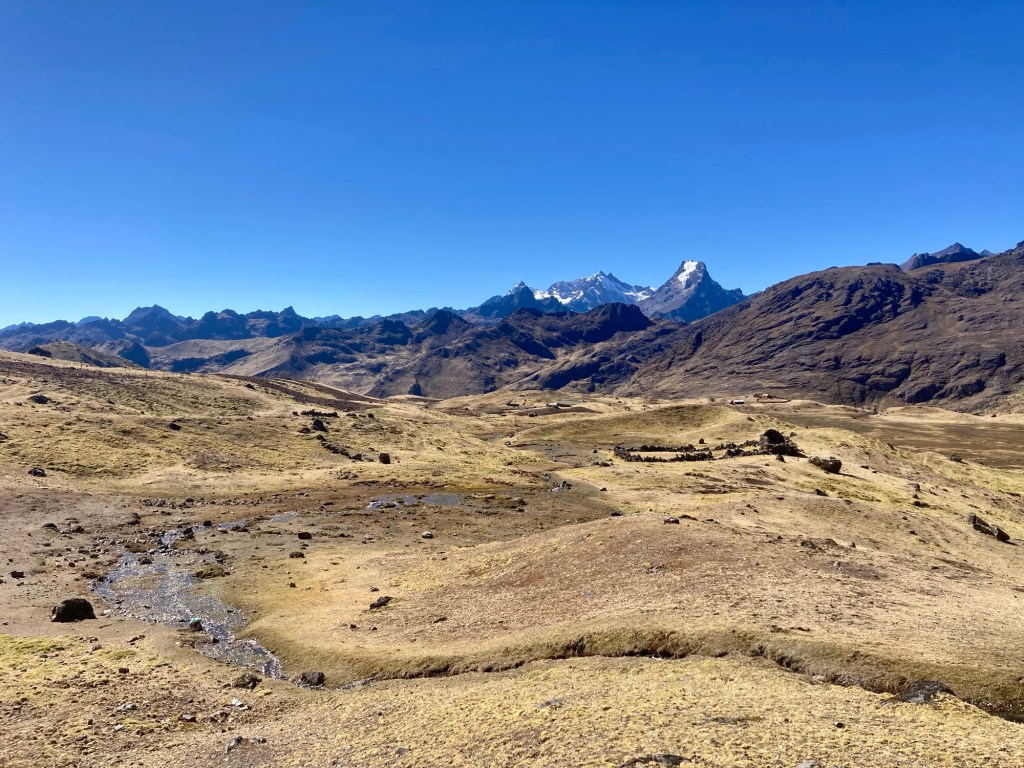
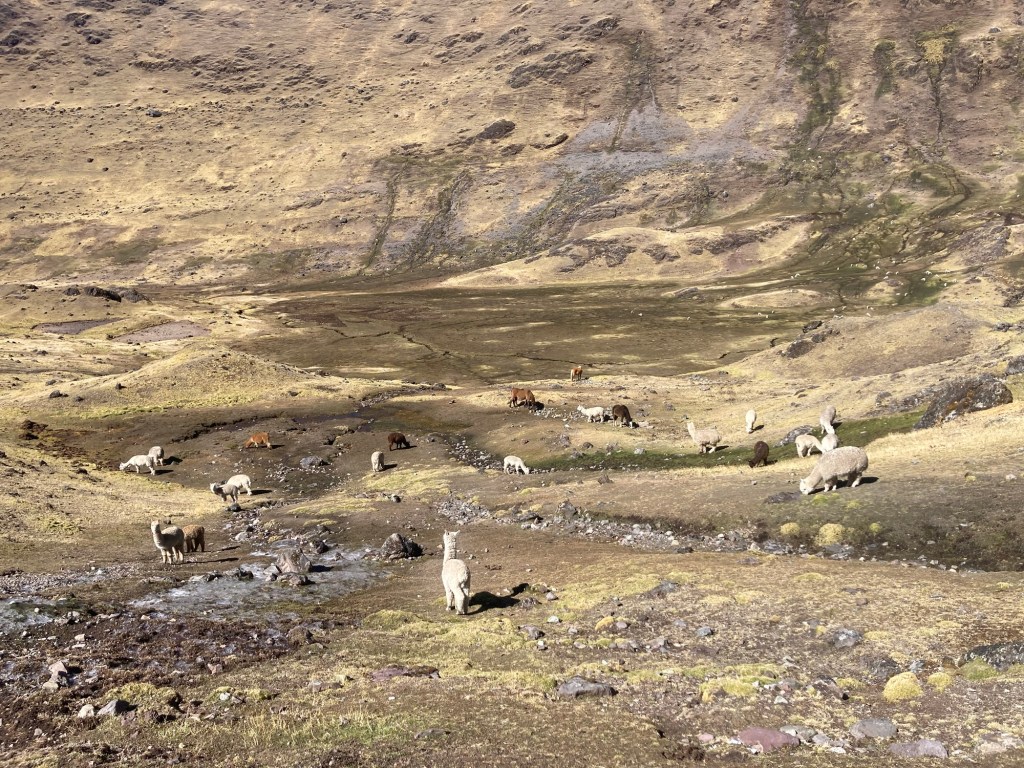
We finally arrived to the top and topped off our bottles at the water station.
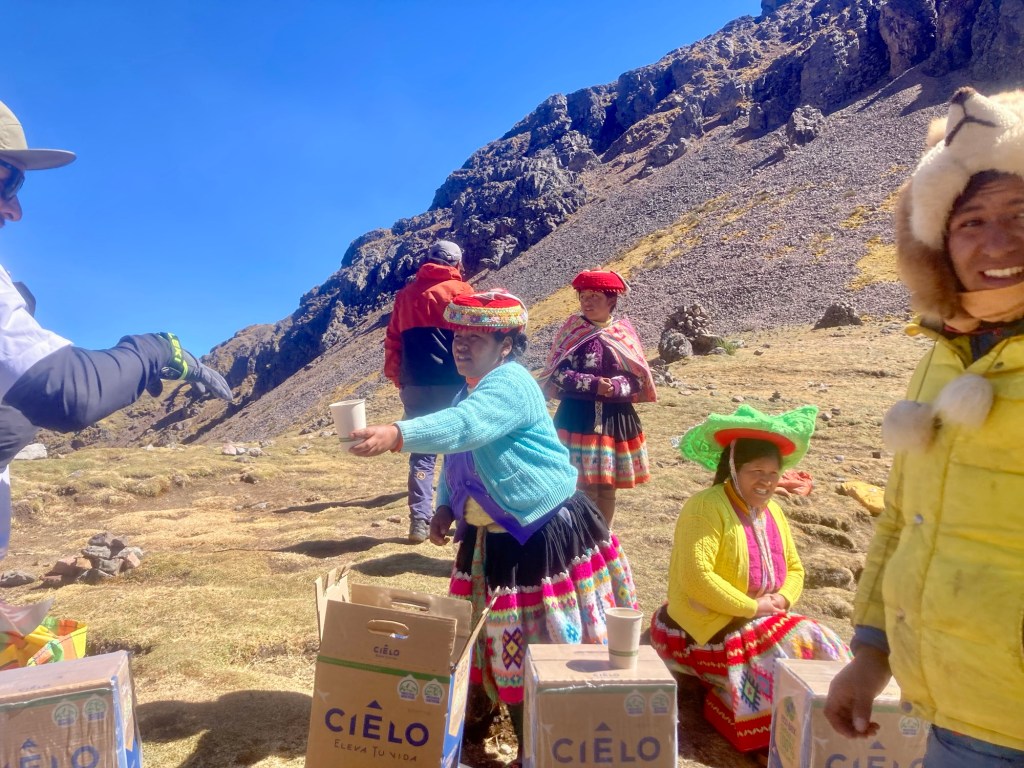
We descended for what seemed like forever. Now the 30k and 13k runners were passing us and we would step aside to let them go by, breaking our momentum. Although I had been waiting for this moment of lengthy downhill, I was starting to get tired and wasn’t moving as quickly and effortlessly as I had pictured I would when envisioning my finish. I looked at my watch to see we were at 52 miles and after all of that downhill, I couldn’t believe there was still over 10 miles to go.
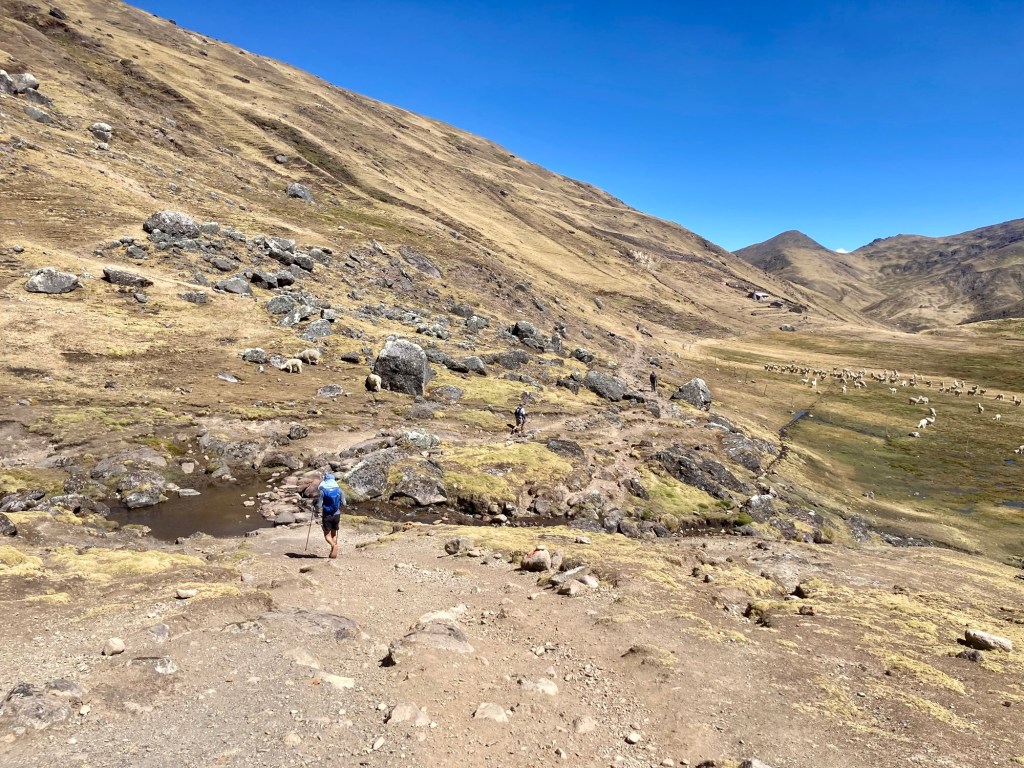
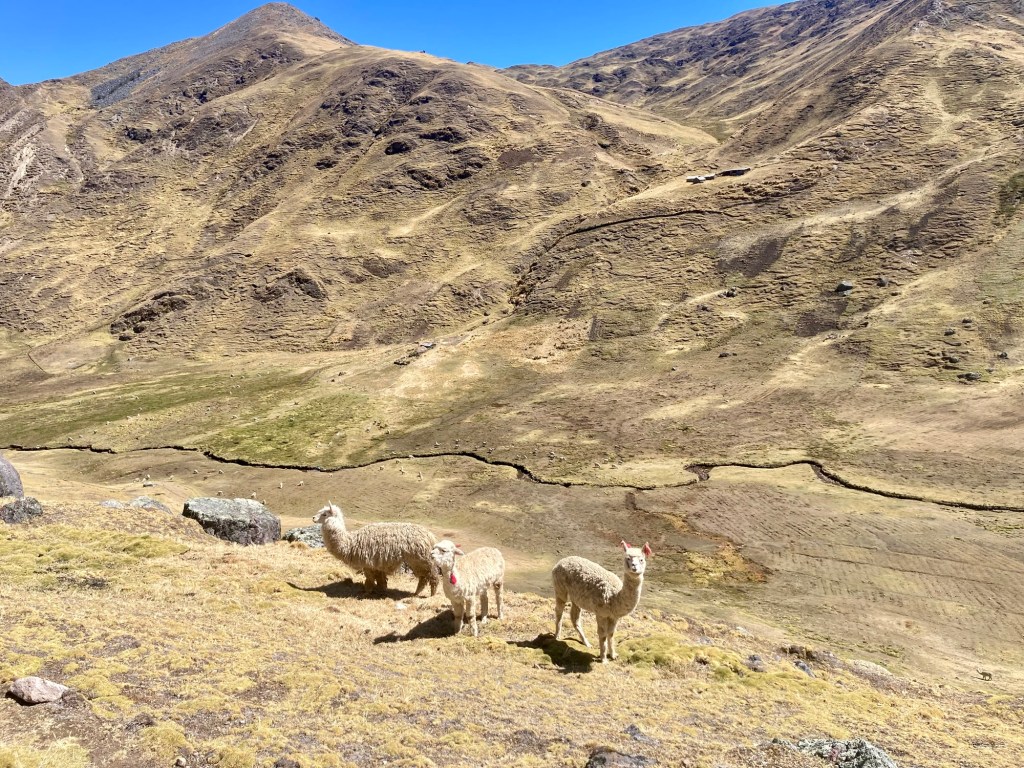
Although I had been preaching verbally (and also in my head) the importance of staying optimistic, the realization of the remaining distance started to chip away at me and my optimism. How could we be on the “home stretch” and still have so much distance to go? The truth was that only I had given myself that expectation and no one else.
It probably took about 3 hours to do the last 10 miles. Although the course profile makes it look all downhill, it sure didn’t feel that way. These last miles were most comparable to a Tor descent into a lifebase; never ending and soul sucking. As we got closer to the finish, I continued to peek around each corner looking for a glimmer of Ollantaytambo, but all I could see was a never ending single track trail rounding the corner – same as the last time I looked.
Yuch and I split up and regrouped a couple of times. Once he stopped to use the bathroom and I walked purposely slowly so he could catch up. The second time he fell behind even though we were both walking. There were times I wanted to start running and he maintained that he couldn’t, that he was no longer physically able to. I knew he was having a hard time but felt like I needed to go my own pace and give him his space. We regrouped at the next water station.
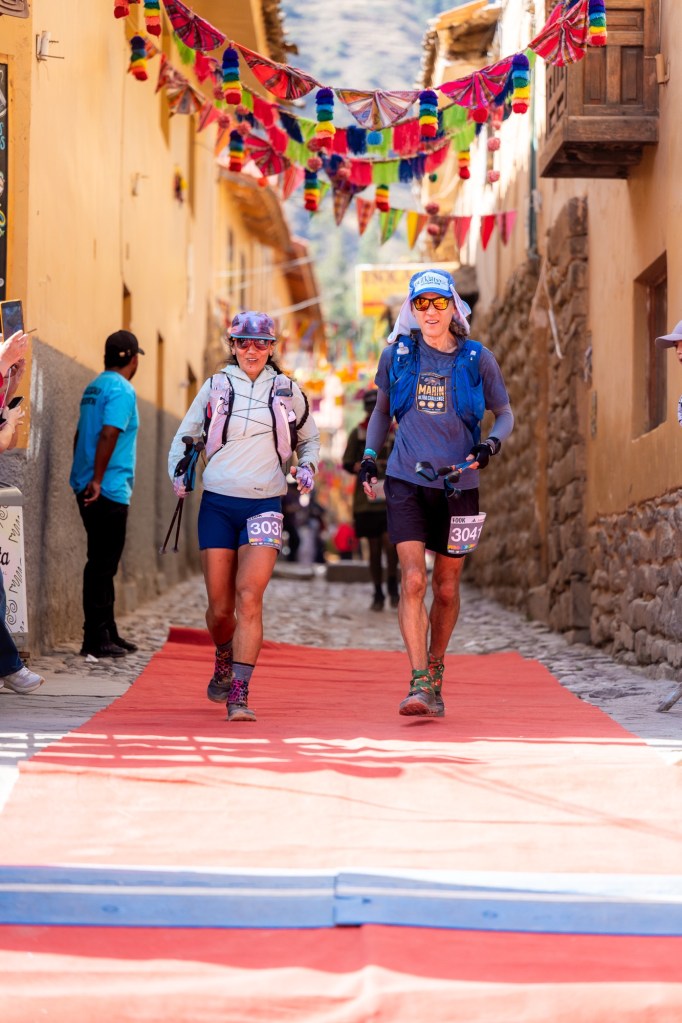
I stayed true to what I had said before. I wasn’t doing this race to compete, but for the adventure and a big part of the adventure was the shared aspect. I wanted to finish together. However, we had 3 miles left and we could either walk the last 3 miles and it take an hour or more, or we could try and run and finish sooner. Yuch agreed that it was a better option to not prolong the torture, and mustered up every little last bit of strength that he had to run those last miles.
Arriving to Ollantaytambo, spectators lined the cobblestone streets cheering loudly. Although the finish reminded me of running into Courmayeur at the end of the Tor, this time we were finishing at a decent hour. Someone yelled out “los estados unidos!” and I wondered how they knew that, but we kept on moving focusing on careful foot placement on the uneven cobblestone ground beneath us. We crossed the finish line together at 2:34 pm, with a finish time of 23:34. The cutoff for the race is 26 hours.
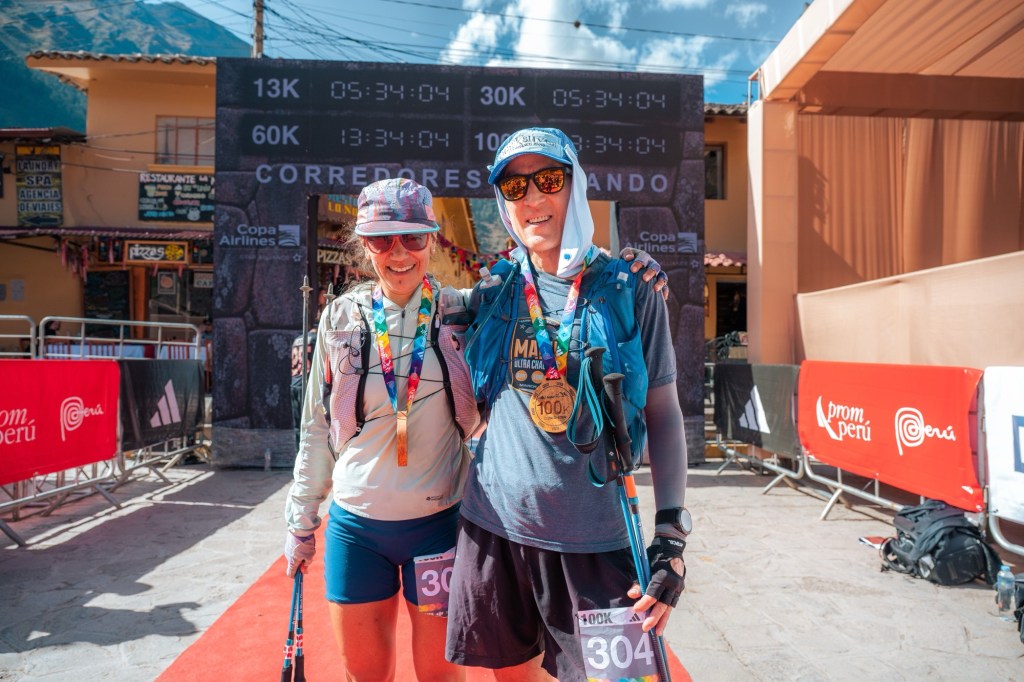
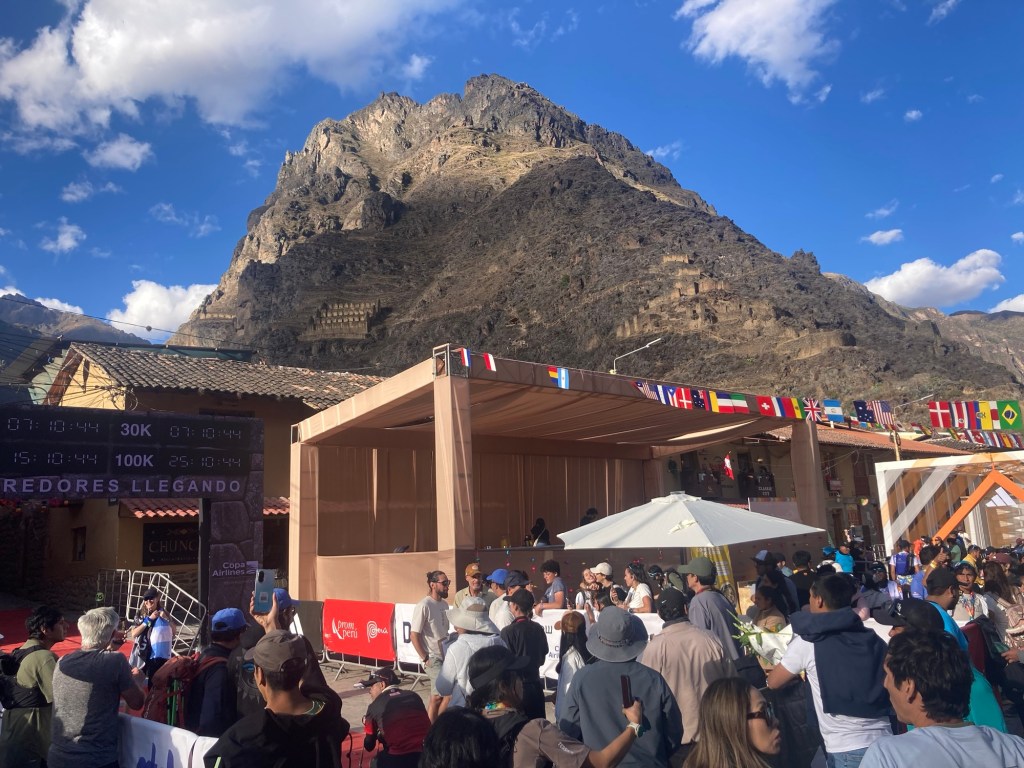
After finishing, our first priority was getting back to our Airbnb (literally around the corner), showering, and taking all of our dirty clothes to the 2-hour laundromat. We would be heading back to Cusco the next morning and in addition to our race clothes, had accumulated quite a bit of dirty laundry. Yuch’s body had completely shut down and after his shower he climbed straight into his bed and under his covers. I dropped our clothes off at the laundry and headed back to the finish line. 100k runners would still be trickling in until the cutoff at 5 pm.
The 101k racers were completely outnumbered by all the other race distances so it was difficult for me to identify them. I identified a photographer that I had seen at the 101k start and asked him if he knew where I had placed in the 101k women’s field (all 4 of them). After telling him my last name, he said he was pretty sure I got second place. Although I hadn’t been necessarily competing, this surprised me as I didn’t remember another 101k female passing us. However, we had been moving pretty slowly at the end so I admitted it could have been likely. I wondered if and when they were going to have a women’s 101k podium ceremony. I sat down and pulled out my phone looking for a tracking website. I had been the first female in the 101k.
I couldn’t hold out to the 5 pm cutoff because the sun was getting low and I was getting cold. I never saw another female finisher come in so in the end, I headed back to the Airbnb. Yuch and I went back to the same vegan restaurant, Ashka, for dinner that night and ordering the vegan platter; a platter of vegan meats, roasted potatoes, chocló, and veggies.
I later learned that there were only two female finishers, the second arriving only 25 minutes after me. If Yuch and I hadn’t decided to run those last 3 miles, she would have definitely passed us. I felt a little sad that there was no 101k female podium ceremony. All the other distance podiums were celebrated with the winners receiving awards. I wasn’t upset because I thought I deserved anything or necessarily ran a “fast” or “good” race. I just felt it was a little strange to not be acknowledged. Plus, I felt very proud as a half Peruvian female to have won even if there was only one other competitor.
I absolutely loved this race and my time in Ollantaytambo and Peru more generally. It makes me sad that everyone in the ultrarunning community is so focused on two races: Western States and UTMB, and all the qualifying races in between to get you there. The Andes 101k was hands down one of the most incredible races I’ve ever done. It is beautiful and challenging, especially with a 26 hour cutoff for what feels like the difficulty of a 100-mile race. I love the history of the race and that the local indigenous Peruvian community volunteer at the aid stations. I thought the race was very well organized and I always felt safe. I can’t say I loved the 3 pm start but in the end I probably spent an even amount of time in the light and in the dark. I hope this blog entry inspires at least one person to sign up for this incredible race!


